Verified Industrial Hardware & Customs Clearance Assets
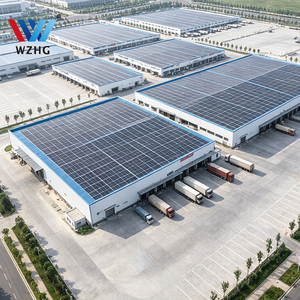
Steel Structure Warehouse for Parcel Sorting Cargo Storage and Distribution With Custom Loading Area
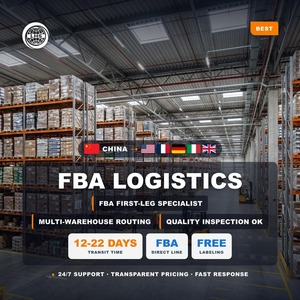
Secure FBA Shipping Logistics Agent Cold Chain From Shenzhen To New Zealand Japan Greece Mexico Morocco Turkey France
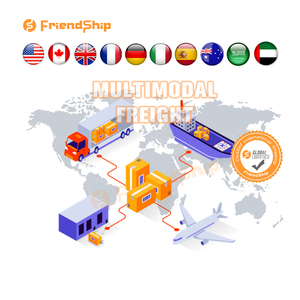
Freight Forwarder China To Australia FCL Sea Shipping Door To Door DDP 40HQ Container Heavy Machinery For Oversized Cargo
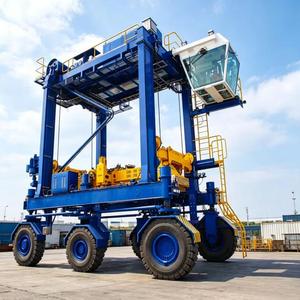
CE Certified Port Terminal Diesel Power Dual Drive Automatic 60 Ton Rubber Tyred Container Straddle Carrier Price
US customs clearance license and a team of customs clearance experts ensures compliance and efficiency DDP
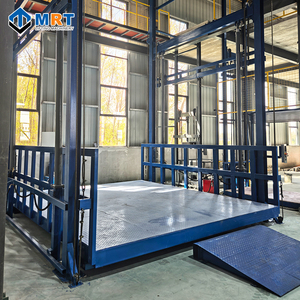
Industrial Cargo Lift Platform Heavy Duty Material Lift Cargo Elevator Goods Lift
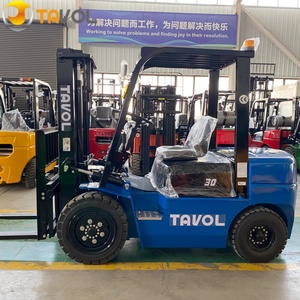
Counterbalance Heavy Cargo Lift Forklift diesel Fork Lifts 2 3 5 7 10 Ton Diesel Forklift
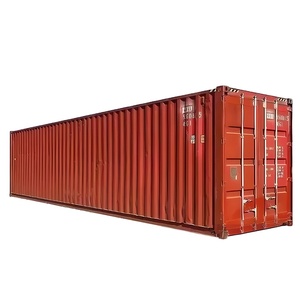
40 ft Mobile Modern Container Terminals Transport Cargo Containers with Large Storage Space for Shipping Containers
Strategic Tariff Classification Engineering for Spanish Imports
Navigating international trade into the Kingdom of Spain requires meticulous alignment with the European Union’s Integrated Tariff of the European Communities (TARIC) system, enforced locally by the Agencia Estatal de Administración Tributaria (AEAT). For global manufacturing plants, factories, and OEM exporters, improper tariff classification of capital goods, heavy industrial lifts, structural steel components, and logistics machinery can lead to severe operational friction, including prolonged port detentions at Algeciras, Valencia, or Barcelona, substantial regulatory fines, and miscalculated Value Added Tax (Impuesto sobre el Valor Añadido - IVA).
Our specialized Tariff Classification Services for Exporters targeting Spain serve as an engineering-grade bridge between factory product specifications and European customs jurisprudence. By evaluating the essential character of complex multi-component machinery under the General Rules for the Interpretation (GRI) of the Harmonized System, our trade specialists eliminate ambiguity before goods arrive on European soil.
Comprehensive Tariff Classification Modules for Factories
From raw structural fabrications to automated heavy lifting equipment, we ensure your export catalog meets exact Spanish TARIC and Combined Nomenclature standards.
10-Digit TARIC Code Audit
Deep technical audit of raw material composition, operating wattage, functional capacity, and sub-assembly structures to assign precise 10-digit TARIC codes for seamless Spanish import processing.
Binding Tariff Information (BTI)
Preparation and submission of legally binding European BTI applications (Información Arancelaria Vinculante - IAV) securing 3-year legal protection across all 27 EU member states.
Duty Mitigation & Anti-Dumping Analysis
Identification of preferential trade agreements, EU autonomous tariff suspensions, quotas, and strategic mitigation of Anti-Dumping Duties (ADD) for factory exporters.
DUA / SAD Filing Alignment
Synchronization of export commercial invoices, packing lists, and origin certificates with Spanish Documento Único Administrativo (DUA) customs clearance declarations.
Dual-Use & Technical Clearance
Specialized classification for industrial equipment requiring Spanish SOIVRE inspection, CE mark verification, and Dual-Use export control documentation.
Spanish Deferred IVA Setup
Guiding global exporters and Spanish importers on utilizing Régimen de Diferimiento del IVA to defer import VAT payments directly into quarterly tax filings.
HS Code Technical Mapping for Core Factory Product Lines
Understanding how key machinery and industrial logistics hardware are evaluated under Spanish Customs (AEAT) tariff schedules.
| Equipment Category | Typical HS / TARIC Chapter | Primary Classification Rule (GRI) | Spanish Customs Inspection Focus |
|---|---|---|---|
| Steel Structure Warehouses | HS 7308.90 (Structures of Iron/Steel) / HS 9406.90 | GRI 1 & GRI 2(a) (Incomplete/Unassembled) | CE Marking, EN 1090 structural integrity certificates, bill of materials verification. |
| Industrial Cargo Lift Platforms | HS 8428.10 (Lifts & Skip Hoists) / 8428.39 | GRI 1 (Heading text specification) | Safety directive compliance, hydraulic circuit schematics, load capacity test reports. |
| Diesel Forklifts & Straddle Carriers | HS 8427.20 (Self-propelled trucks) / HS 8426.41 | GRI 3(b) (Essential character) | Engine emissions compliance (EU Stage V), dual-drive motor specs, gross vehicle weight. |
| FCL/LCL Cold Chain Logistics Systems | HS 8418.69 (Refrigerating equipment) / 8609.00 | GRI 1 & Section XVI Notes | F-Gas regulation compliance, thermal insulation properties, reefer compressor specs. |
| Mobile Container Terminal Modules | HS 9406.90 (Prefabricated Buildings) | GRI 1 (Prefabricated modular units) | Electrical pre-installation check, insulation material fire ratings, structural stability. |
When factories export large infrastructure, such as Steel Structure Sorting Warehouses or 40ft Mobile Container Terminals, components are shipped in disassembled or "knocked-down" condition across multiple 40HQ containers. Under GRI 2(a), Spanish customs evaluates these shipments as complete functional units, provided the full set of components is declared under a unified shipping manifest. Misunderstanding this rule often leads exporters to incorrectly split classifications across steel beams (HS 7308) and electrical fittings (HS 8537), causing duty discrepancies and administrative holds.
Localized Application Scenarios in Spanish Logistics Corridors
How our tariff classification expertise streamlines industrial entry across Spain’s key economic hubs.
Automated Logistics Warehouses & Heavy Lifts
Valencia is the principal maritime gateway for industrial equipment destined for Madrid and central Spain. We assist factory exporters shipping CE Certified Rubber Tyred Container Straddle Carriers and Goods Elevator Platforms by verifying engine compliance and TARIC tariff subheadings before vessel arrival, avoiding expensive port demurrage fees.
Heavy Machinery & Oversized DDP Project Freight
Managing DDP shipments for oversized cargo requires exact tariff precision. For factories shipping 60-ton dual-drive machinery and diesel forklifts through Algeciras, our team coordinates duty assessment, environmental tax compliance, and inland road transport clearances straight to factory floors in Seville or Malaga.
Cold Chain Infrastructure & E-Commerce Sorting
Catalonia and the Basque Country lead in pharmaceutical cold chain and e-commerce distribution. Exporters of Secure Cold Chain Equipment and Parcel Sorting Warehouse Structures leverage our tariff classification to navigate specific Spanish SOIVRE quality control checks and deferred VAT arrangements efficiently.
Our Structured 5-Step Tariff Classification Workflow
A rigorous, audit-proof procedure engineered to safeguard international factories exporting to Spain.
Blueprint & Spec Audit
Analyzing engineering blueprints, CAD specs, material breakdowns, and operational manuals directly from your manufacturing plant.
GRI & Legal Mapping
Applying General Rules of Interpretation to pinpoint the mandatory 6-digit HS, 8-digit CN, and 10-digit EU TARIC codes.
AEAT Regulatory Audit
Cross-referencing code options against Agencia Tributaria rulings, anti-dumping databases, and EU quota schedules.
BTI Filing & Dossier
Drafting technical customs binding dossiers (BTI/IAV) and assembling pre-clearance certificates for Spanish customs brokers.
Clearance & DDP Handover
Seamless coordination with port agents for immediate DUA validation, zero-delay release, and final door-to-door delivery.
Frequently Asked Questions (FAQ)
Essential customs classification and regulatory answers for global factories exporting to Spain.
What is the difference between an 8-digit CN code and a 10-digit TARIC code in Spain?
How does Binding Tariff Information (BTI) protect our manufacturing plant?
What documents are required to perform a technical tariff classification for machinery?
How does the Spanish Deferred IVA (Régimen de Diferimiento del IVA) work for exporters?
Can you assist with DDP (Delivered Duty Paid) shipping logistics from China to Spain?
What happens if Spanish Customs (AEAT) disputes our declared HS Code?
Optimize Your Factory Exports to Spain Today
Eliminate customs clearance bottlenecks, secure legally binding TARIC classifications, and lower landed costs with our specialized compliance team.