1. Technical Architecture of LCL Consolidation for the Pakistan Market
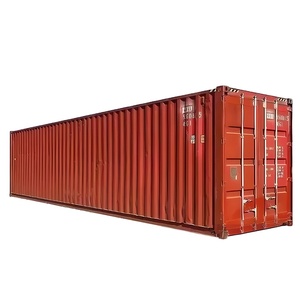
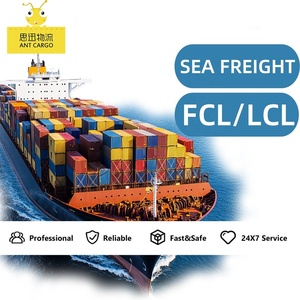
In the contemporary global trade ecosystem, Less than Container Load (LCL) shipping represents the backbone of flexible, capital-efficient international supply chain management. For manufacturers, exporters, and procurement officers serving the rapidly evolving Pakistani economy, LCL ocean freight is no longer merely a fallback option for small shipments—it is a strategic leverage tool. By enabling multiple shippers to share space within a single standardized 20-foot or 40-foot intermodal ISO container, LCL logistics dramatically lowers inventory holding costs, minimizes working capital tie-ups, and empowers Pakistani enterprises to maintain lean supply chains.
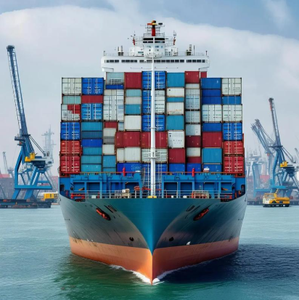
Operating high-frequency LCL trade lanes into Pakistan requires deep structural integration between origin Container Freight Stations (CFS) across key manufacturing epicenters—such as Ningbo, Shanghai, Shenzhen, Hamburg, and Miami—and primary entry gateways in Pakistan. The primary maritime portals, namely Karachi Port Trust (KPT), South Asia Pakistan Terminal (SAPT), and Port Muhammad Bin Qasim (QICT), function as vital nodes connecting ocean transport to inland distribution networks extending to Lahore, Faisalabad, Sialkot, and Rawalpindi.
Strategic Operational Baseline: LCL Mechanics
LCL cargo requires precision at three critical junctions: origin cargo origin aggregation, container stuffing density optimization, and destination de-consolidation under strict customs supervision. Mistakes at origin in volumetric weight (CBM) calculation or inaccurate Harmonized System (HS) code manifest filings can lead to severe demurrage charges and physical customs holds under Pakistan’s automated WeBOC (Web Based One Customs) system.
The De-consolidation Framework at Karachi Sea Terminals
Upon container discharge at KPT or Port Qasim, consolidated LCL boxes are immediately transferred under bonded customs escort to specialized off-dock terminals or inland freight stations (such as Pak-Shaheen CFS, Burque CFS, or NLC Container Gates). Here, the Master Bill of Lading (MBL) held by the line is mapped against individual House Bills of Lading (HBL) issued to distinct consignees across Pakistan. Our operational workflow ensures that Master Cargo Manifests are electronically transmitted to the Customs Computerized System (CCS) well prior to vessel berth, guaranteeing smooth delivery order (DO) release and rapid un-stuffing.
2. Core Competencies & Service Modules for Exporting to Pakistan
As a specialized LCL manufacturer and exporter logistics provider, our infrastructure bridges overseas industrial output directly with end-users in Pakistan. We have structured dedicated service pillars designed to eliminate common friction points in cross-border trade.
Direct Port Consolidation
Weekly fixed-day departures from major Asian and Western ports direct to Karachi. Minimal handling ensures lower risk of cargo damage or loss.
PSW & WeBOC Integration
Complete pre-clearance documentation audit aligned with Pakistan Single Window regulations, preventing valuation queries and customs fines.
Multimodal Bonded Trucking
Seamless bonded carrier haulage from Karachi ports directly to Lahore Dry Port (Mughalpura), Sialkot Dry Port Trust, and Islamabad Dry Port.
Optimizing Volumetric (CBM) Ratios for Exporters
For manufacturers exporting to Pakistan, cargo density determines profitability. LCL ocean freight is billed based on a 1 CBM to 1,000 kg ratio (whichever is higher). Our cargo staging facilities utilize 3D automated volumetric scanners to verify precise length, width, height, and weight measurements before loading. By advising exporters on outer carton optimization and pallet stacking configurations, we frequently assist clients in reducing total billable volume by 12% to 22%, yielding immediate unit cost reductions.
3. Localized Application Scenarios Across Pakistani Industrial Zones
Pakistan's economic landscape is characterized by concentrated industrial clusters, each possessing distinct logistics requirements, customs profiles, and urgency thresholds. Our specialized LCL forwarding network caters precisely to these regional ecosystems:
A. Textile Raw Materials & Dyes to Faisalabad & Karachi
As the powerhouse of Pakistan's export economy, the textile sector in Faisalabad, SITE Karachi, and Korangi Industrial Area relies heavily on steady inputs of specialized synthetic yarns, industrial dyes, finishing chemicals, and loom spare parts. Manufacturers cannot afford supply disruptions, yet full-container loads of niche chemicals often exceed short-term production requirements.
The Solution: We operate temperature-monitored, hazardous-compliant LCL consolidation nodes. Raw materials sourced from East Asian manufacturers are consolidated into weekly LCL boxes, cleared via specialized chemical customs desks at Port Qasim, and dispatched via express bonded trucks directly to Faisalabad mills within 48 hours of container un-stuffing.
B. Surgical Instruments & Leather Machinery to Sialkot
Sialkot is world-renowned for its precision surgical instrument manufacturing and sporting goods production. Local exporters regularly import high-grade stainless steel wire, specialized CNC machine components, polishing compounds, and leather tanning chemicals from Europe and China.
The Solution: We provide end-to-end LCL DDP (Delivered Duty Paid) services. Small-batch machinery parts are consolidated in origin warehouses, transported via ocean freight to Karachi, and moved via bonded railway/road transit to the Sialkot Dry Port Trust (SDPT). Local factories receive cargo right at their doorstep with all duties, taxes (Sales Tax, Income Tax under Section 148), and clearing charges fully pre-settled.
C. Electronics, Solar & IT Equipment to Lahore & Islamabad
With Pakistan's rapid transition toward renewable energy and digital infrastructure, imports of solar inverters, PV accessory components, server hardware, and telecommunications modules into Punjab and the Federal Capital have surged.
The Solution: Precision LCL handling with shock-absorbent palletization and anti-static packaging safeguards fragile electronics. Furthermore, we assist importers in navigating the mandatory Engineering Development Board (EDB) approvals and Alternative Energy Development Board (AEDB) solar duty exemptions prior to vessel clearance.
4. LCL vs. FCL vs. Air Freight: Strategic Decision Matrix
Selecting the ideal shipping mode for the Pakistani market requires balancing speed, landed cost, and inventory turnover. The table below outlines operational parameters for procurement managers evaluating shipping channels into Karachi.
| Logistics Metric | LCL Sea Freight (Consolidated) | FCL Sea Freight (Full Container) | Air Freight (Express/Standard) |
|---|---|---|---|
| Best Suitable Volume | 1.0 CBM to 15.0 CBM | 18.0 CBM + (20ft / 40ft / 45ft) | 0.1 CBM to 2.0 CBM (High Value) |
| Average Transit (Asia to Karachi) | 15 - 20 Days (Door to Door) | 12 - 16 Days (Port to Port) | 3 - 6 Days (Airport to Airport) |
| Landed Freight Cost / CBM | Highly Economical ($40 - $90 / CBM) | Lowest per CBM at max load | High ($3.50 - $7.00 / KG) |
| Customs Release Mechanism | CFS De-consolidation (HBL level) | Direct Yard Clearance (MBL level) | Air Cargo Terminal Clearing |
| Inventory Risk Factor | Low (Frequent small batch orders) | Medium/High (Large capital tied up) | Minimal (Just-In-Time emergency) |
| Inland Delivery Flexibility | Direct bonded truck to any ICD | Requires full container drayage | Van / Small truck local transport |
5. Pakistan Market Trends & Regulatory Landscape (2025–2030)
Navigating shipping to Pakistan requires a forward-looking understanding of regulatory, macroeconomic, and infrastructural developments. The State Bank of Pakistan (SBP) and the Federal Board of Revenue (FBR) have introduced digitized frameworks aimed at accelerating trade while tightening compliance.
1. Mandatory Adoption of Pakistan Single Window (PSW)
The rollout of the Pakistan Single Window (PSW) system has fundamentally transformed import-export clearing. By interconnecting trade regulatory agencies—including the Department of Plant Protection, Animal Quarantine Department, Pakistan Standards and Quality Control Authority (PSQCA), and National Radio Telecommunication Corporation—PSW has eliminated paper-based filings. Our customs clearance systems are fully integrated via API with PSW, allowing real-time processing of import permits and digital release of LCL consignments.
2. Forex Management & Letter of Credit (LC) / Document against Payment (DP) Terms
Foreign exchange regulations in Pakistan require careful alignment between commercial invoice terms and bank financing mechanisms. Under current SBP directives, imports moving under L/C, Contract, or Open Account terms must be recorded with exact Unique Identification Numbers (UIN). LCL forwarders who fail to link House Bills of Lading to the importer's Form E/PSW profile cause severe clearing blocks. Our dedicated documentation team verifies all banking and trade finance documents prior to cargo departure, ensuring seamless remittance authorization.
3. CPEC Infrastructure & Multimodal Expansion
The expansion of the China-Pakistan Economic Corridor (CPEC) infrastructure network has shortened transit times between Northern Pakistani Dry Ports and southern sea terminals. Modernized dual-carriageways and upgraded railway links (ML-1 line modernization) mean LCL shipments arriving at Karachi can be transferred to inland freight stations in Lahore, Multan, and Peshawar up to 30% faster than a decade ago.
6. Enterprise Strengths: Why Leading Global Exporters Partner With Us
Building on decades of foundational logistics experience—rooted in managing complex multi-lane ocean and air networks—our enterprise provides a rock-solid, transparent, and accountable freight service. Our corporate philosophy is built around four core pillars:
Founder Accountability
Direct executive oversight on major trade lanes. No automated ticket queues or faceless call centers—every account has direct leadership access.
Multilingual Logistics Desk
Our dedicated control towers operate in English, Urdu, Chinese, and Spanish, facilitating flawless coordination across borders.
Transparent Surcharge Policy
Zero hidden destination fees. We provide fully itemized quotes covering origin CFS, ocean freight, and Pakistan terminal charges upfront.
E-E-A-T (Experience, Expertise, Authoritativeness, Trustworthiness) Commitment
Logistics excellence is built on verifiable reliability. With over two decades of combined operational experience navigating complex maritime customs environments across the Americas, Asia, and South Asia, our team applies rigorous quality management protocols. Every LCL consolidation box is tracked via real-time GPS telemetry, and milestone alerts—from origin stuffing to final delivery order release—are pushed directly to your procurement team.
7. Procurement FAQ: LCL Shipping & Importing to Pakistan
Below are answers to critical technical and commercial questions frequently raised by procurement managers, buyers, and global exporters.
Q1: How is LCL freight calculated for shipments destined for Pakistan?
LCL ocean freight is calculated based on Revenue Tons (w/m), where 1 CBM equals 1,000 Kilograms. Whichever metric is greater dictates the billable weight. In addition to base ocean freight, destination charges in Pakistan include Terminal Handling Charges (THC), Delivery Order (DO) fees, CFS de-consolidation fees, and WeBOC filing fees. We provide fully itemized estimates so importers know exact landed costs prior to shipping.
Q2: What essential documents are required for smooth customs clearance under PSW in Pakistan?
Key documents include: 1) Commercial Invoice bearing exact HS Codes; 2) Detailed Packing List specifying gross/net weight and carton dimensions; 3) Clean House Bill of Lading (HBL); 4) Certificate of Origin (COO); 5) Importer's Sales Tax Registration (NTN/STRN) and active WeBOC ID; and 6) Form E / LC authorization generated via the importer's commercial bank in Pakistan.
Q3: What is the transit time difference between shipping to Karachi Port Trust (KPT) versus Port Qasim (QICT)?
Direct ocean transit times from major Asian ports (e.g., Shanghai, Ningbo, Singapore) to both Karachi portals are identical—typically 12 to 16 days port-to-port. However, Port Qasim frequently offers faster off-dock CFS clearance for chemical and bulk industrial goods due to modern highway access bypassing Karachi city traffic, whereas KPT is ideally located for central city commercial markets.
Q4: Can LCL cargo be moved directly to inland dry ports like Lahore, Faisalabad, or Sialkot?
Yes. We offer Bonded Carrier Transit (TP - Transhipment Permit) services. Under customs bond, the consolidated container or de-consolidated LCL packages are loaded onto licensed NLC (National Logistics Cell) or private bonded trucks at Karachi and transported directly to inland dry ports (e.g., Mughalpura Dry Port Lahore or Sialkot Dry Port), where final customs duty assessment and clearance take place.
Q5: How do you prevent cargo damage or loss during LCL consolidation and un-stuffing?
We enforce strict CFS loading standards: heavy machinery or steel items are bottom-stowed and blocked/braced with ISPM-15 heat-treated dunnage; fragile goods are top-stowed or segregated in dedicated racks. Every package must be marked with clear shipping marks corresponding to the HBL. Digital photos are taken during both container stuffing at origin and un-stuffing in Karachi.
Optimize Your LCL Supply Chain to Pakistan Today
Partner with verified consolidation specialists. Request a competitive LCL rate quote, schedule a customs compliance review, or consult directly with our trade logistics directors within 24 hours.