

1. Architectural Framework of International Customs Compliance in the London Market
A comprehensive examination of statutory regulatory shifts, CDS declarations, valuation compliance, and origin auditing across Greater London's international trade corridors.
Operating within the London commercial market demands unprecedented agility in navigating regulatory frameworks. Following the total migration of Her Majesty’s Revenue and Customs (HMRC) from the legacy CHIEF system to the Customs Declaration Service (CDS), alongside the implementation of the UK Border Target Operating Model (BTOM), cross-border trade compliance has evolved from a clerical routine into a strategic determinant of supply chain resilience.
As premier international customs compliance brokerage suppliers and exporters serving the London metropolitan area, Thames Estuary logistics gateways, and international air cargo hubs such as London Heathrow (LHR) and London Gatwick (LGW), we deliver rigorous audit protocols, specialized tariff classification, and proactive risk mitigation. London serves as a central hub for high-value financial, pharmaceutical, aerospace, and retail imports; consequently, any clearance bottleneck at port-of-entry translates directly to liquidated damages, demurrage fees, and compromised commercial reputation.
HMRC CDS Migration & Verification
Full alignment with Data Elements (DE) 1/10, 3/15, and 5/23 under the UK Customs Tariff. Seamless submission of electronic declarations preventing clearance holds at London Gateway and Felixstowe.
HS Code & Tariff Classification
Granular binding tariff information (BTI) auditing. Accurate commodity code assignment ensuring proper duty calculation under the UK Global Tariff (UKGT) schedule.
Customs Valuation & Transfer Pricing
Rigorous verification of Method 1 through Method 6 valuation protocols, accounting for royalties, assists, freight additions, and intercompany transfer pricing adjustments.
Technical Anatomy of HMRC Declaration Auditing
Modern compliance brokerage requires deep operational familiarity with the UK Customs Code. Our compliance architecture is built around three structural pillars designed to eliminate fiscal and regulatory vulnerability for London importers:
- Declarations Accuracy & Procedure Codes (CPC): Mapping exact 7-digit Custom Procedure Codes to optimize relief mechanisms such as Inward Processing (IP), Outward Processing Relief (OPR), and Customs Warehousing.
- Rules of Origin & Preference Management: Exercising precision verification under the EU-UK Trade and Cooperation Agreement (TCA) and UK Generalized Scheme of Preferences (GSP), capturing origin statements to legally minimize duty exposure.
- Post-Clearance Auditing & Deferred Import Duty Management: Managing Duty Deferment Accounts (DDA) and Postponed VAT Accounting (PVA), giving London finance executives maximum cash-flow efficiency while remaining fully compliant with statutory HMRC record-keeping requirements.
2. Localized Logistics Application Scenarios Across Greater London Trade Corridors
Deploying tailored customs compliance solutions and material handling equipment across London's strategic maritime, air, and inland freight terminals.
The London market is not a singular logistical node, but an intricate network of specialized entry points, each defined by distinct regulatory thresholds, infrastructure constraints, and operational velocity requirements. Below, we break down how our compliance advisory and cargo handling solutions integrate across key regional trade corridors.
| London Hub / Port Node | Primary Cargo Modality | Regulatory Focus & Compliance Requirement | Deployed Infrastructure Solution |
|---|---|---|---|
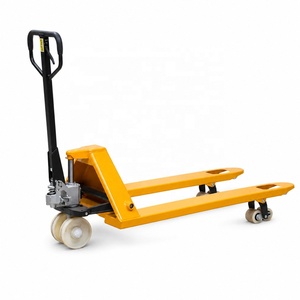
| DP World London Gateway (Thames Estuary) | Deep-Sea FCL / LCL Container Vessels | GVMS registration, Port Health inspections (SPS controls), Inventory Linking (CNS) | Hydraulic Pallet Trucks (3500kg), Pallet Lift Platforms, Duty Deferment Advisory |
| London Heathrow Airport (LHR Cargo Hub) | Time-Critical Air Freight & Cold Chain | Fast-track CDS Entry, IATA DGR Compliance, CITES & Controlled Goods Clearance | Air Freight Charter Solutions, CE Certified Rolling Shutter Doors for Clean Rooms |
| Port of Felixstowe (London Feeder Corridor) | Bulk Commercial Exporters & Intermodal Rail | NCTS Transit Declarations (T1/T2), Export Accompanying Documents (EAD) | Heavy Duty Lift Equipment, Project Cargo Handling, Consolidated DDP Forwarding |
| London Thamesport & Tilbury Logistics Park | Short-Sea EU Ro-Ro & Industrial Machinery | Safety & Security Declarations (ENS/EXS), Inland Customs Warehousing | Reverse Logistics / Repair DDP Agent Services, Fast Shutter Isolation Systems |
Scenario A: Heathrow Airport Air Freight Fast-Track & Cold Chain Integrity
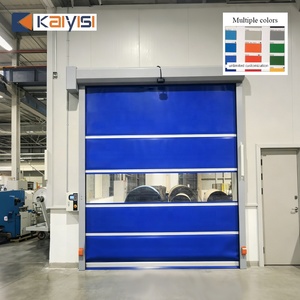
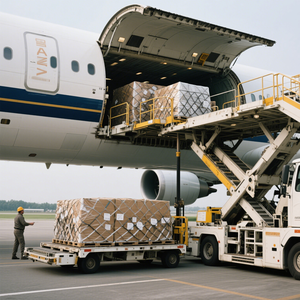
For high-value pharmaceutical, bio-tech, and electronics importers centered around the Heathrow Cargo Center, clearance delays risk product degradation. By combining our direct CDS EDI links with specialized warehouse installations—such as CE-Certified PVC High-Speed Rapid Rolling Doors for Clean Rooms—importers maintain strict thermal control while securing clearance within hours of flight landing.
Scenario B: London Gateway Heavy Project Cargo & Material Transport
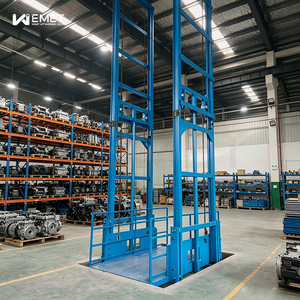
Industrial machinery exporters moving heavy equipment through DP World London Gateway encounter complex tariff classifications and specialized handling hurdles. Utilizing Hydraulic Pallet Trucks (3500kg Capacity) and Industrial Heavy-Duty Freight Elevators alongside our project cargo customs team, we ensure oversized capital equipment complies with UKCA markings, machinery safety directives, and complex import duty valuations.
Scenario C: Post-Brexit Reverse Logistics & E-Commerce Returns
UK retailers trading across the English Channel face mounting friction with returned goods. Our Reverse Logistics Sea/Air DDP Agent Services leverage Inward Processing and Returned Goods Relief (RGR) frameworks, enabling London enterprise brands to re-import defective or returned inventory without incurring duplicative import duties or VAT penalties.
3. Localized Development Trends & Regulatory Shifts in the London Customs Market
Analyzing the impact of digital trade single windows, carbon accounting (CBAM), and automated compliance algorithms on UK cross-border supply chains.
UK Single Trade Window (STW)
The UK government's phased introduction of the Single Trade Window aims to synthesize customs, transport, and sanitary data into a single gateway. Forward-thinking London importers are restructuring their ERP data pipelines to ensure real-time API integration with broker clearance engines.
UK CBAM & Environmental Compliance
With the UK Carbon Border Adjustment Mechanism (CBAM) set to penalize embedded carbon emissions in imported steel, aluminum, cement, and fertilizers by 2027, London customs brokers are now tasked with auditing supply chain carbon intensity metrics alongside monetary valuation.
Sanctions & Dual-Use Enforcement
Following heightened geopolitical friction, HMRC and the Office of Financial Sanctions Implementation (OFSI) have expanded export control screening. London exporters must maintain rigorous end-user undertakings (EUU) and dual-use licensing protocols to prevent severe statutory penalties.
Information Gain: Proactive Risk Governance vs. Reactive Brokerage
Historically, customs brokerage in London operated reactively—entries were lodged only after cargo arrived at the port frontier. In today’s high-velocity regulatory climate, reactive brokerage leads to systematic failure. Modern enterprise supply chains require Pre-Clearance Pre-Lodgement Protocols.
By leveraging the Goods Vehicle Movement Service (GVMS) for Ro-Ro traffic through Dover and Eurotunnel, and securing pre-lodged CDS declarations prior to vessel departure at origin, London businesses can achieve continuous "green-route" automated releases, completely bypassing physical port holds.
4. The 2M Advantage: Founder-Led Customs Governance & Operational Superiority
Combining two decades of international freight leadership with direct founder accountability for every London shipment.
In an industry dominated by impersonal call centers, automated ticketers, and fragmented sub-contracting networks, 2M Freight and Logistics operates on a fundamental principle: every shipment carries our family name and direct personal accountability.
Direct Founder Stewardship on Every Import & Export Entry
Co-founders Marcus Vinicius Soares (former decade-long head of large-scale logistics operations in Brazil managing hundreds of enterprise accounts) and Marco Junior (multimodal international freight and rail transport specialist) personally review complex customs compliance procedures. When you trade in the London market through 2M, you communicate directly with seasoned decision-makers, not entry-level desk clerks.
1 Business Day Response Guarantee
Every tariff inquiry, rate request, or clearance escalation is addressed directly by a founder within 24 business hours, guaranteeing operational speed.
Trilingual Fluency (EN / ES / PT)
Eliminating cross-border misunderstandings. Our team seamlessly interfaces in English, Spanish, and Portuguese with suppliers, buyers, and international port authorities.
End-to-End DDP Execution
From factory floor packing to customs entry, port drayage, and final London warehouse placement, we manage the single-partner chain of custody.
5. Frequently Asked Questions (FAQ) for London Importers & Exporters
Expert answers to common regulatory, operational, and documentation queries encountered in the London market.
Optimize Your London Customs Compliance Framework Today
Speak directly with our founding directors to audit your tariff classifications, streamline CDS declarations, or secure door-to-door freight forwarding rates.
Get a Quote