Executive Whitepaper: International Customs Compliance & Tariff Brokerage for Malaysia
Malaysia stands at the strategic nexus of Southeast Asian trade, serving as a primary manufacturing engine for global Semiconductor, Electrical & Electronics (E&E), Automotive, Solar PV, and Heavy Machinery sectors. However, managing complex cross-border logistics while maintaining absolute compliance with the Royal Malaysian Customs Department (RMCD / Kastam Diraja Malaysia) requires deep statutory technicality, regulatory foresight, and meticulous administrative execution.
Importers, global manufacturers, and OEM factories operating within key Malaysian industrial zones—such as the Bayan Lepas Free Industrial Zone in Penang, Kulim High-Tech Park (KHTP) in Kedah, Port Klang Free Zone (PKFZ) in Selangor, and the Johor-Singapore Special Economic Zone (JS-SEZ)—face evolving statutory frameworks. Securing seamless cargo entry requires expert classification under the ASEAN Harmonized Tariff Nomenclature (AHTN), leveraging Free Trade Agreements (such as ACFTA Form E and RCEP), executing precise Sales and Services Tax (SST) exemptions, and maintaining strict adherence to the Strategic Trade Act 2010 (STA 2010).
Information Gain Insight: Under RMCD's modernized compliance directives, tariff misclassification or failure to produce valid Duty Exemption Certificates (e.g., Schedule C under the Sales Tax Person Exempted Order 2018) can trigger immediate operational bottlenecks, mandatory warehouse audits, and severe financial penalties under Section 133 of the Customs Act 1967. Partnering with a licensed compliance brokerage guarantees audit-proof documentation prior to vessel berthing.
Localized Application Scenarios across Malaysian Industrial Corridors
Customs brokerage and industrial transport cannot rely on generic logistics templates. Manufacturing ecosystems across Peninsular and East Malaysia demand hyper-localized compliance strategies tailored to regional port infrastructure and specific industrial verticals:
1. Penang & Kulim (Northern E&E & Semiconductor Corridor)
High-value cleanroom machinery, SMT lines, and sensitive silicon wafer equipment cleared via Penang International Airport (PIA) and Penang Port (Butterworth). Focuses on expedited K1 Air DDP Clearance, SIRIM COA (Certificate of Approval) verification, and STA 2010 Dual-Use technology permits.
2. Port Klang Industrial Hub (Northport & Westport)
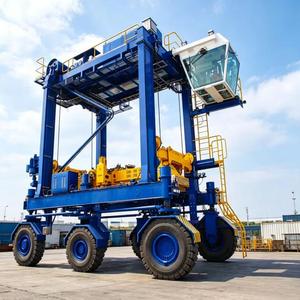
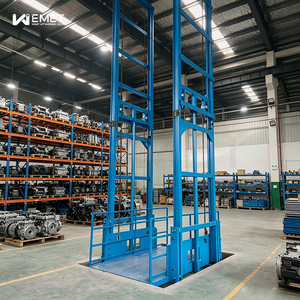
Handling heavy industrial capital goods, rubber-tyred straddle carriers, warehouse elevators, and raw materials. Facilitates bonded K9 Transit Declarations into the Port Klang Free Zone (PKFZ) and seamless inland heavy-haulage transport to Klang Valley manufacturing plants.
3. Johor-Singapore SEZ & Port of Tanjung Pelepas (PTP)
Cross-border feeder logistics, automated material handling systems, and reverse logistics. Manages K2 Export Clearances and K8 bonded transfers between Singapore Free Logistics Zones and Johor manufacturing sites via the Second Link corridor.
4. Kuantan & East Coast Economic Region (ECER)
Heavy renewable energy infrastructure, solar module manufacturing components, and bulk raw materials entering through Kuantan Port. Coordinates specialized Form E Tariff Reductions under the ASEAN-China Free Trade Area.
Evolving Macro Trends in Malaysian Trade Compliance & Industrial Logistics
Navigating the Malaysian market requires alignment with key government structural shifts, digital initiatives, and global regulatory mandates:
1. New Industrial Master Plan (NIMP 2030) & Automation Mandates
Malaysia's NIMP 2030 prioritizes high-value manufacturing, industrial automation, and robotics. Importers of advanced machinery—such as automated 60-ton straddle carriers, industrial freight elevators, and telescopic extendable conveyors—can leverage government tax incentives and MIDA (Malaysian Investment Development Authority) import duty exemptions. Compliance brokerages must ensure exact technical specification matching against MIDA exemption letters to qualify for zero-rated entry.
2. Transition to uCustoms & National Single Window Modernization
RMCD's rollout of uCustoms (micro-service digital clearance infrastructure) integrated with Dagang Net's National Single Window (NSW) demands real-time data accuracy. Electronic submission of K1 (Import), K2 (Export), and K9 (Movement of Goods) declarations requires pre-validation of HS Codes, valuation criteria, and digital permit linking (e.g., MITI, SIRIM, DOE) to prevent automated system holds.
3. E-Invoicing Mandates & SST CJ5 Exemption Frameworks
With the Inland Revenue Board of Malaysia (LHDN) enforcing mandatory e-invoicing alongside RMCD's Sales Tax (Person Exempted from Payment of Tax) Order 2018 (Schedule C, CJ5/CJ5A exemptions), manufacturing plants must synchronize customs import documentation directly with their corporate accounting records. Misalignments between declared CIF values on Customs Form K1 and internal e-invoices lead to tax recalculations and penalties.
4. Supply Chain Realignment ("China + 1") & Form E Preferential Tariffs
As multinational corporations expand factory footprints in Malaysia as part of "China + 1" diversification, managing origin compliance becomes paramount. Utilizing ASEAN-China FTA (ACFTA) Form E certificate of origin allows factories to reduce import duties from standard MFN rates (often 10%-30%) down to 0%. Expert brokerages inspect Certificate of Origin (COO) parameters, transit routing rules, and direct consignment criteria to guarantee preferential status.
Malaysian Freight Mode & Customs Clearance Technical Matrix
Selecting the optimal combination of transportation mode and customs declaration path is critical to balance landed cost, lead time, and statutory compliance:
| Service Mode | Customs Declaration | Best Suited Industrial Cargo | Key Regulatory Checklist | Target SLA / Transit |
|---|---|---|---|---|
| Formal Air Freight DDP | Form K1 (Direct Import) | Semiconductor parts, cleanroom components, urgent spares | SIRIM COA, STA 2010 Dual-Use Permit, Invoice Valuation | 1 – 3 Days (Expedited) |
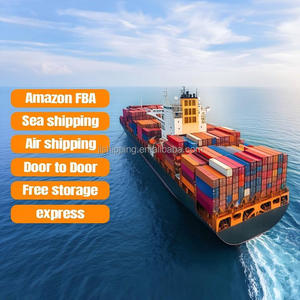
| Full Container Load (FCL) | Form K1 / MIDA Exemption | Factory machinery, raw materials, heavy equipment | Schedule C SST Exemption (CJ5), Form E COO, Bill of Lading | 12 – 18 Days (Ocean Route) |
| Bonded Transit Logistics | Form K9 / Form K8 | Transshipment via PKFZ / PTP to free trade zones | Bonded Trucking License, RMCD Escort Seal, Manifest Data | 24 – 48 Hours (Inland) |
| Project Heavy Lift Cargo | Special K1 / Manual Audit | 60-Ton Straddle Carriers, Heavy Lift Elevators, Oversized Modules | Public Works Dept (JKR) Road Permit, Port Over-dimensional Clearance | Project Tailored Lead Time |
| Global Reverse Logistics | Form K2 (Export) & Re-import | Defective SMT modules, equipment repair & return, warranty parts | Outward Processing Exemption, Serial Number Verification | 5 – 7 Days (Air / Express) |
Built on Experience. Driven by Accountability.
In international freight forwarding and customs compliance, a single filing error can stall an entire production line. Founded on principles of hands-on operational leadership, our organization bridges complex global manufacturing supply chains with stringent local customs environments.
With over 20 combined years of specialized logistics experience—ranging from massive rail operations and port heavy-lift transfers to high-priority air cargo handling—our executive team manages every account with direct founder accountability.
Marcus Vinicius Soares
Co-Founder & Heavy Freight Operations Lead
Why Global Factories Trust Our Compliance Architecture
Unlike automated platforms or faceless freight call centers, we deploy customized logistics engineering for every shipment. Our multilingual operations team (fluent in English, Portuguese, and Spanish) works directly with port authorities, customs officers, and ground transport networks.
- Founder-Led Execution: Every inquiry and compliance audit is reviewed personally by a founder within 24 hours.
- Zero-Demurrage Focus: Pre-clearance documentation verification ensures cargo releases immediately upon vessel discharge.
- Multi-Modal Engineering: Seamless integration across Ocean FCL/LCL, Air DDP, Heavy Haulage, and Reverse Logistics.
Marco Junior
Co-Founder & Cross-Border Logistics Specialist
Frequently Asked Questions: Purchasing & Importing in Malaysia
Technical guidance for supply chain managers, procurement officers, and trade compliance directors shipping industrial goods to Malaysia: