Featured Logistics & Fleet Equipment Solutions for Indonesia Trade Lanes
Integrated cross-border shipping, reverse logistics, automated sorting, and terminal material handling equipment specifically calibrated for commercial cargo moving between China, USA, Europe, and major Indonesian sea/air ports.
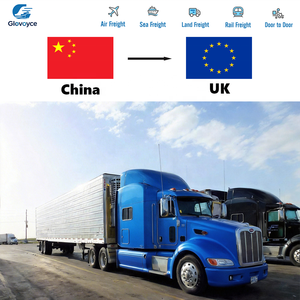
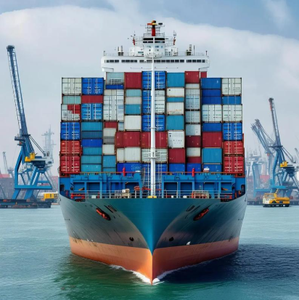
Whitepaper: Executive Masterclass on Commercial Cargo Documentation for the Indonesian Trade Landscape
International cross-border commerce entering the Indonesian archipelago demands a sophisticated understanding of regulatory frameworks, customs clearance mechanics, and precise cargo documentation. As Southeast Asia’s largest economy, Indonesia presents lucrative market opportunities for global manufacturers and exporters. However, navigating the strict regulatory scrutiny enforced by the Directorate General of Customs and Excise (Direktorat Jenderal Bea dan Cukai - DJBC), Ministry of Trade (Kemendag), and Ministry of Industry (Kemenperin) requires immaculate documentary accuracy. A single discrepancy between a Commercial Invoice, Packing List, and Bill of Lading can trigger non-compliance flags, shifting cargo directly to the notorious "Red Line" (Jalur Merah) physical inspection, incurring crippling demurrage fees, and risking administrative fines or shipment rejection.
This comprehensive whitepaper outlines the technical, legal, and operational documentation standards required for seamless B2B commercial import operations serving the Indonesian market. By combining global freight forwarding expertise with granular localized compliance frameworks, manufacturers and exporters can achieve predictable transit times, mitigate duty overheads, and establish a resilient supply chain pipeline.
1. Fundamental Regulatory Architecture in Indonesia: NIB, API, and INSW Integration
Under current Indonesian trade decrees, importing commercial goods requires an integrated legal standing within the Indonesia National Single Window (INSW) digital portal. The modern framework centers around the Business Identification Number (Nomor Induk Berusaha - NIB), which acts as the foundational import identity, replacing legacy standalone permits. Importers must hold the appropriate Importer Identification Number (Angka Pengenal Importir - API), categorized primarily into:
- API-U (General Importer License): Issued to trading entities importing finished goods for commercial distribution across Indonesian wholesale and retail markets.
- API-P (Producer Importer License): Granted to industrial manufacturers importing raw materials, capital machinery, spare parts, and intermediate inputs strictly used within their owned domestic manufacturing plants.
Furthermore, commercial cargo documentation must strictly align with the 10-digit ASEAN Harmonized Tariff Nomenclature (AHTN / HS Code). Accurate HS Code assignment dictates not only the baseline Import Duty (Bea Masuk), Value Added Tax (PPN - 11%), and Income Tax (PPh Article 22 - typically 2.5% to 10%), but also triggers whether the shipment falls under restricted or prohibited import policies (LARTAS - Larangan & Pembatasan).
2. Essential Commercial Cargo Documentation Checklist for Indonesia Clearance
To ensure flawless import clearance through major customs hubs like Tanjung Priok (Jakarta), Tanjung Perak (Surabaya), or Soekarno-Hatta International Airport (CGK), manufacturers and exporters must issue and validate seven core documentation artifacts before vessel berth:
| Document Name | Issuing Party | Critical Verification Criteria & Technical Requirements |
|---|---|---|
| Commercial Invoice | Manufacturer / Exporter | Must state full itemized descriptions, unit price, currency, Incoterms 2020 (FOB/CIF/DDP), HS Code, detailed net/gross weights, and distinct PO reference numbers matching the packing list. |
| Packing List (P/L) | Exporter / Forwarder | Exact breakdown of inner/outer packages, pallet counts, dimensional specs per carton, marks & numbers, and container seal numbers. Weight variance exceeding 5% triggers immediate red line physical re-weighing. |
| Bill of Lading (B/L) or Air Waybill (AWB) | Ocean / Air Carrier | Clean-on-board status, correct consignee tax registration (NPWP), notify party details, correct port codes (e.g., IDTPP for Tanjung Priok), and exact matching cargo description with the customs declaration (PJB/PIB). |
| Certificate of Origin (Form E / Form AK / Form D) | Chamber of Commerce / Customs Authority | Enables preferential tariff rates under ASEAN Free Trade Agreements (e.g., ACFTA Form E for China, AKFTA for Korea). Must adhere strictly to direct consignment rules and origin criteria rules. |
| Surveyor Report (Laporan Surveyor - LS) | Authorized Inspection Agency (KSO Sucofindo/Surveyor Indonesia) | Mandatory for LARTAS-regulated commodities (textiles, steel, electronics, cosmetics, machinery). Must be conducted at the port of loading prior to vessel departure. |
| SNI Certificate (Standard Nasional Indonesia) | National Standardization Agency (BSN) | Required for goods subject to mandatory quality standards (electrical appliances, automotive parts, safety gear, specific consumer goods). Testing must be conducted by accredited laboratories. |
| Material Safety Data Sheet (MSDS) / DG Declaration | Chemical Manufacturer | Mandatory for hazardous materials, lithium battery-powered items, or specialized chemical cargo. Must detail UN numbers, HAZMAT classification, and emergency response procedures in English/Bahasa. |
Strategic Localized Application Scenarios Across Indonesian Trade Hubs
Customized documentation workflows and multimodal freight execution tailored to the unique infrastructure requirements of Indonesia's key economic zones and industrial estates.
Cikarang & Karawang Industrial Belt (Heavy Machinery & Automotive Parts)
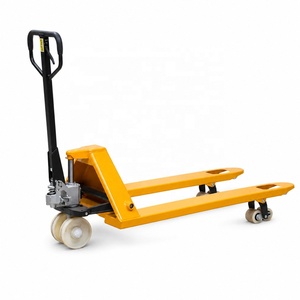
Supplying Tier-1 automotive manufacturers and heavy industrial plants in West Java requires pre-cleared Masterlist documentation for duty exemption on machinery import. Our seamless DDP logistics integrate specialized heavy equipment—such as 3500kg Hydraulic Pallet Trucks—directly to factory floors with customs-bonded transport permits (TPB).
Soekarno-Hatta (CGK) Air Cargo Express Hub (Cross-Border E-Commerce)
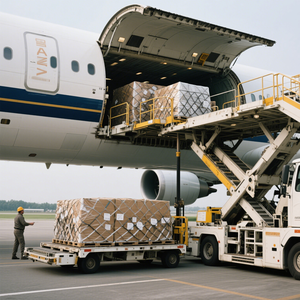
With Indonesia’s booming digital economy, cross-border e-commerce parcels entering via Jakarta CGK airport undergo stringent automated sorting and de minimis valuation checks. We manage high-frequency small parcel air freight documentation, ensuring rapid clearance within 24–48 hours, fully compliant with PMK 96/2023 import customs regulations.
Batam Free Trade Zone (FTZ) & Kendal Special Economic Zone (SEZ)
Operating within Batam FTZ or Kendal SEZ offers preferential tax status, but requires specialized PPFTZ documentation and customs reporting. We facilitate seamless inter-island transit (Antar Pulau) and international sea-air cargo handling, providing end-to-end visibility for raw material entry and finished goods export.
Macro Trends & Regulatory Transformations Shaping Indonesian Trade Logistics
The trade environment in Indonesia is undergoing unprecedented modernization driven by government digitisation initiatives, environmental sustainability mandates, and shifting regional trade alliances. International exporters must adapt their logistics strategies to capitalize on these macro shifts:
1. Integration of CEISA 4.0 & AI-Powered Customs Audits
The Indonesian Customs Authority has fully deployed the CEISA 4.0 (Computerized Customs Information System) ecosystem. This system utilizes advanced data analytics and automated cross-referencing algorithms to evaluate importer risk profiles in real-time. Discrepancies between historic valuation databases and declared CIF invoice values are flagged instantly. Exporters and forwarders must ensure data consistency across all digital submissions to maintain a "Green Line" clearance trajectory.
2. Tightening of Import Restrictions (Permendag 36/2023 & Revisions)
Indonesia's Ministry of Trade has implemented revised import regulations aimed at protecting domestic manufacturing while regulating the influx of consumer goods, footwear, electronics, and chemical products. The expansion of mandatory Post-Border to Border customs controls means that documents like the Surveyor Report (LS) and Perizinan Impor (PI) must be fully validated before loading at origin ports. Unprepared exporters risk severe vessel delay penalties or compulsory re-exportation orders.
3. Shift Toward Sustainable Freight & Green Supply Chain Compliance
Environmental, Social, and Governance (ESG) criteria are increasingly governing maritime and air cargo logistics across Southeast Asia. Major Indonesian ports are transitioning toward electrified cargo handling infrastructure—driving demand for heavy-duty material transport tools like zero-emission Hydraulic Pallet Trucks and eco-optimized fleet routing. Forward-thinking manufacturers are adopting low-carbon DDP shipping lanes and reusable bulk packing totes to align with regional sustainability benchmarks.
Frequently Asked Questions by Indonesian Buyers & Global Exporters
Clear, expert answers addressing common customs roadblocks, documentation errors, and freight forwarding queries when shipping commercial cargo into Indonesia.
1. Import Duty (Bea Masuk): CIF Value × Duty Rate %
2. Value Added Tax (PPN 11%): (CIF Value + Import Duty) × 11%
3. Income Tax (PPh Art 22): (CIF Value + Import Duty) × Tax Rate % (2.5% for API license holders, 7.5%–10% without API).
Why Leading Global Manufacturers Partner with 2M Freight & Logistics
Built on family values, operational accountability, and decades of combined industry leadership, 2M Freight and Logistics bridges global manufacturers with complex destination markets like Indonesia, Latin America, and North America.
Direct Founder Accountability
Founded by Marcus Vinicius Soares and Marco Junior, every commercial account is managed with personal oversight. No endless call centers or automated ticketing queues—you communicate directly with decision-makers possessing over 20 years of hands-on logistics expertise.
Global Hub Operations & Multilingual Team
Operating out of our strategically located Miami/Doral hub alongside established partner networks across Shanghai, Ningbo, Jakarta, and European ports, our team conducts business fluently in English, Spanish, and Portuguese, ensuring seamless cross-border coordination.
End-to-End Duty & Document Guarantee
We perform rigorous pre-audit checks on all shipping documentation before vessel departure. From ocean FCL/LCL consolidation to charter air freight solutions, we ensure 100% compliance with destination customs, eliminating surprise fees and port congestion delays.
Turnkey DDP & Project Cargo Capabilities
Whether transporting high-volume e-commerce parcels, delicate project equipment, or heavy-duty port terminal material handling gear, our multimodal door-to-door network delivers transparent pricing, real-time tracking, and total peace of mind.