Core Cold Chain Equipment & Multimodal Logistics Solutions

South Africa Cold Chain Performance Benchmarks
Quantifiable operational benchmarks designed to withstand Sub-Saharan thermal stresses, municipal power interruptions, and strict export compliance standards.
The South African Cold Infrastructure Landscape: Challenges & Systemic Requirements
South Africa stands as the economic gateway and primary agricultural exporter of Southern Africa. With high-density production corridors spanning Limpopo, Mpumalanga, the Eastern Cape, and the Western Cape, the country demands an unbroken cold chain for perishable exports including citrus, table grapes, avocados, and pome fruit. However, operating temperature-controlled facilities within South Africa presents unique operational hurdles that standard off-the-shelf refrigeration systems cannot survive.
Key among these challenges is severe thermal stress caused by summer ambient ambient temperatures exceeding +40°C in inland regions, coupled with municipal utility volatility and national electricity grid load shedding (Eskom Stage 1 through Stage 6 outages). A single unexpected rise in internal air temperature above +4°C during cold storage can trigger physiological damage, post-harvest decay, or immediate rejection of perishable shipments at coastal export terminals such as the Port of Durban, Port Elizabeth, and Cape Town Container Terminal.
To establish a resilient supply chain, procurement directors, logistics engineers, and facility owners serving South Africa must transition from legacy masonry cold stores to high-performance, modular cold chain infrastructure. This requires integrating non-ozone-depleting Polyisocyanurate (PIR) insulated structural panels, high-frequency automated PVC rapid doors, and hybrid refrigeration architectures compatible with solar photovoltaic (PV) array integration and thermal energy storage (TES).
Engineering Thermal Envelope Integrity: PIR Insulation & Rapid Air Infiltration Barriers
In cold room design, thermal loss primarily occurs through two pathways: conductive heat transfer through walls, roofs, and floors, and convective air exchange during door cycle openings. Modern high-density cold chain factories supplying the South African market focus heavily on eliminating thermal bridges and drastically reducing moisture ingress.
1. Polyisocyanurate (PIR) Structural Panel Performance:
Standard Expanded Polystyrene (EPS) panels historically used in African commercial cold rooms exhibit high water vapor absorption over time, leading to thermal degradation. Modern engineered PIR sandwich panels feature a closed-cell structure (>95% closed cell density) that guarantees continuous thermal resistance (R-values up to 7.5 m²·K/W for 150mm thick panels). Crucially for South African insurance compliance, PIR offers superior fire resistance under SANS 10177 testing, self-extinguishing without contributing to flame propagation.
2. Rapid-Roll High-Speed PVC Shutter Doors for Environmental Isolation:
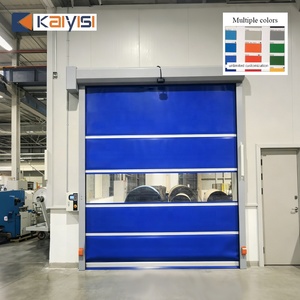
In busy logistics hubs located in City Deep (Johannesburg) or Prospecton (Durban), freezer access doors remain open for up to 6 hours cumulatively per day during fork-lift loading cycles. Standard sliding freezer doors move too slowly, allowing humid, warm air to rush in. This causes rapid frost buildup on evaporator coils, driving up compressor energy demand by up to 45% and elevating internal temperatures.
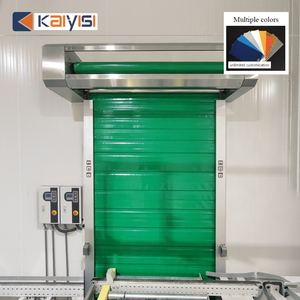
Installing CE-certified automatic high-speed PVC doors operating at 1.2 m/s to 2.0 m/s creates an effective dynamic thermal barrier. Combined with double-curtain air locks, anti-freeze heating cables in side frames, and soft bottom edge safety systems, these doors seal the opening within seconds, preserving internal conditions even under high-traffic industrial handling.
Strategic Equipment Modules for African Operational Reliability
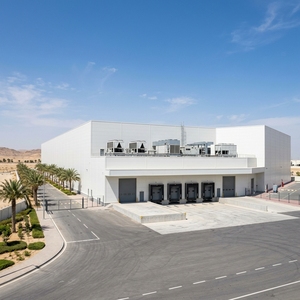
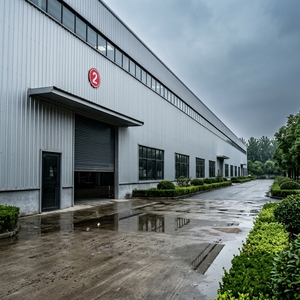
Clear Span Steel Logistics Warehouses
Engineered portal frames providing wide clear spans for modern high-bay racking systems, optimizing volumetric storage efficiency for FMCG and third-party logistics (3PL) operators in South Africa.
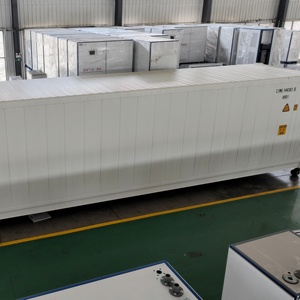
Containerized Plug & Play Reefer Modules
Self-contained ISO container cold stores designed for rapid deployment in remote agricultural packhouses (e.g., Tzaneen, Ceres) or cross-border SADC border posts with zero structural civil work required.
Smart IoT Telematics & HACCP Logging
Integrated micro-sensor arrays measuring temperature, humidity, and door status in real time, auto-generating digital compliance logs required for SA Dept of Agriculture, Land Reform and Rural Development (DALRRD) exports.
Load Shedding Thermal Storage Integration
High-efficiency phase-change materials (PCM) coupled with inverter-driven compressors, allowing facilities to maintain target temperatures (-22°C to +2°C) during prolonged 4-to-8 hour grid power interruptions.
Localized Application Scenarios in South Africa
Tailored cold chain deployment strategies aligned with key regional economic corridors and specialized product requirements across Southern Africa.
1. Citrus & Fresh Produce Export Hubs (Limpopo, Mpumalanga & Western Cape)
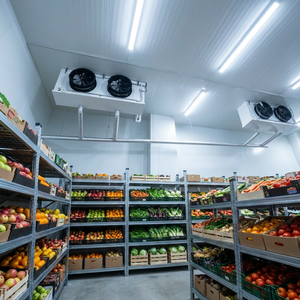
South Africa is one of the world's top exporters of fresh citrus fruits (oranges, lemons, grapefruit). Fresh produce harvested in regions like Marble Hall, Tzaneen, or the Sunday River Valley must undergo rapid forced-air precooling down to protocol temperatures (e.g., -0.6°C for phytosanitary cold treatment against Mediterranean fruit fly) within hours of harvest.
Our large clear-span steel insulated warehouses and containerized cold storage systems provide dedicated precooling tunnels, ambient holding zones, and high-speed loading docks. These installations allow packhouses to manage peak seasonal volumes while maintaining full compliance with the Perishable Products Export Control Board (PPECB) protocols prior to transport to the ports of Durban or Cape Town.
2. Pharmaceutical & Vaccine Cold Chain Integrity (Gauteng Healthcare Axis)
The Tshwane-Johannesburg corridor serves as the distribution engine for human vaccines, biologics, and active pharmaceutical ingredients (APIs) across Southern Africa. Storing temperature-sensitive pharmaceuticals requires strict adherence to WHO Good Distribution Practice (GDP) and South African Health Products Regulatory Authority (SAHPRA) standards.
Utilizing clean-room grade rapid-rolling PVC doors featuring continuous airtight perimeter seals alongside PIR modular cold rooms guarantees zero particulate contamination and maintains tight temperature windows (+2°C to +8°C and ultralow -80°C freezer zones). Redundant backup power connectivity ensures uncompromised cold chain integrity even during localized power outages.
3. Urban Perishable FMCG & E-Commerce Fulfillment (Cape Town & Durban Hubs)
Rapid urbanization in South Africa’s coastal and metros has surged demand for online grocery delivery and dark-store fulfillment. Facility operators require multi-temperature facilities capable of handling ambient, chilled (+2°C), and deep-freeze (-25°C)SKUs simultaneously under one roof.
By engineering fast-shutter thermal barriers between internal rooms, facilities mitigate internal condensation and floor icing, reducing maintenance down-time and protecting worker safety during intense picking and packing operations.
Engineering Specifications & Material Selection Guide
A technical comparison matrix for selecting optimal thermal envelopes and door access systems for African environmental operating conditions.
| Feature / Parameter | PIR Modular Sandwich Panels | EPS Standard Panels | High-Speed PVC Rapid Doors | Conventional Sliding Freezer Doors |
|---|---|---|---|---|
| Thermal Conductivity (λ) | 0.020 - 0.022 W/m·K (Superior) | 0.035 - 0.040 W/m·K (Moderate) | N/A (Air Infiltration Barrier) | 0.028 W/m·K (Door Panel Only) |
| Fire Safety Rating | B-s1, d0 (SANS 10177 Class 1) | Combustible (Requires Sprinklers) | Self-Extinguishing Flame Retardant | Varies by Core Insulation |
| Cycle Opening Speed | N/A (Static Wall System) | N/A (Static Wall System) | 1.2 m/s to 2.5 m/s (Instant) | 0.2 m/s to 0.4 m/s (Slow) |
| Thermal Infiltration Reduction | Eliminates Cold Bridges | Prone to Joint Thermal Leakage | Cuts Ingress by up to 85% | High Air Exchange per Cycle |
| Eskom Load Shedding Retention | Holds Temp for 12-18 Hours | Holds Temp for 4-6 Hours | Prevents Thermal Spike on Entry | Significant Ingress During Entry |
| Expected Service Life | 25+ Years (Corrosion Resistance) | 10-12 Years (Moisture Ingress Risk) | > 1,000,000 Cycles | 200,000 Cycles (Mechanical Wear) |
Localized Development Trends in the SA Cold Supply Chain
Emerging technology adoptions reshaping energy efficiency, trade logistics, and regulatory compliance across the Southern African Development Community (SADC).
1. Solar-Assisted Off-Grid Refrigeration
With South Africa's high solar irradiance (average >4.5 kWh/m²/day), commercial cold storage factories are integrating roof-mounted solar PV arrays with variable-frequency drive (VFD) refrigeration compressors. This allows plants to run directly on solar power during peak daytime hours, sharply cutting electricity bills and buffering against Eskom grid failures.
2. Adoption of Green Natural Refrigerants
Following South Africa’s ratification of the Kigali Amendment to the Montreal Protocol, there is a rapid shift away from HFCs (R404a, R134a) toward natural refrigerants including Ammonia (NH3) for bulk industrial freezing and Transcritical CO2 (R744) for retail distribution hubs, significantly lowering Global Warming Potential (GWP).
3. Regional SADC Intra-African Trade Expansion
The African Continental Free Trade Area (AfCFTA) is expanding cross-border trade corridors from South Africa into neighboring Namibia, Botswana, Zimbabwe, and Mozambique. Modular containerized cold rooms and heavy-duty insulated truck bodies are becoming critical assets for moving high-value perishables across border control points smoothly.
4. Stringent Environmental Separation Mandates
Health and food safety audits (HACCP, ISO 22000, BRCGS) across South African retail giants (e.g., Shoprite, Woolworths, Pick n Pay) now strictly mandate automated high-speed roll-up doors and air curtains to prevent pest entry, dust contamination, and air exchange between raw product receiving zones and clean storage rooms.
Why Enterprise Buyers Partner With Our Manufacturing Network
Combining over 20 years of international logistics engineering, specialized manufacturing expertise, and direct executive-level project oversight.
Direct Founder Accountability & Multimodal Logistics Integration
Unlike traditional equipment dealers who outsource shipping or brokers who lack engineering depth, our operational model merges cold storage manufacturing precision with full end-to-end multimodal transport execution. Led personally by experienced founders with decades of hands-on logistics management, we ensure every panel, compressor unit, and rapid PVC shutter door is designed, packed, and delivered intact directly to your site in South Africa.
- Turnkey Supply & Custom Sizing: Engineered structural designs tailored to South African National Standards (SANS) and coastal wind-load requirements (Cape Town / Durban).
- Optimized Ocean Reefer & Flat-Rack Freight: Standardized modular component dimensions designed to maximize ocean container packing density, reducing freight cost per cubic meter.
- Multilingual Technical Support: Direct communication with technical directors in English, Spanish, and Portuguese, streamlining complex engineering approvals before fabrication.
- Rigorous Pre-Shipment Quality Testing: 100% factory pre-assembly testing for automatic high-speed PVC door motors, thermal seal integrity, and structural steel alignment prior to export dispatch.
Frequently Asked Questions by South African Buyers
Addressing essential technical, regulatory, and logistics queries for procurement managers, agricultural co-ops, and cold storage developers in SA.
Build Your High-Performance Cold Storage Infrastructure Today
Connect directly with our engineering and logistics specialists to design a resilient, energy-efficient cold chain solution customized for the South African market.
Send an Inquiry