Specialized Logistics & Documentation Product Portfolio
Precision supply chain management, reverse logistics, and dock equipment tailored for ASEAN trade lanes and northern Vietnam industrial hubs.



Executive Summary: Navigating China-to-Hanoi Cargo Documentation Compliance
As northern Vietnam reinforces its status as a global manufacturing titan, the trade corridor connecting Chinese industrial centers—such as Shenzhen, Guangzhou, Ningbo, and Yiwu—to the Greater Hanoi economic zone (including Bac Ninh, Thai Nguyen, and Hai Phong) has expanded exponentially. However, high-volume cross-border trade brings strict regulatory friction: Vietnam Customs General Department (GDVC) has introduced computerized auditing protocols under the VNACCS/VCIS system, making document accuracy paramount.
For B2B importers, original equipment manufacturers (OEMs), and procurement managers operating in Hanoi, working with an authoritative China Commercial Cargo Documentation Services Factory and Supplier is no longer an administrative afterthought—it is a critical strategic advantage. Discrepancies between Commercial Invoices (CI), Packing Lists (PL), Bills of Lading (BL/AWB), and Certificates of Origin (ACFTA Form E) lead to costly demurrage, loss of preferential tariff duties, and cargo seizures at cross-border land gates like Huu Nghi / Tan Thanh or sea terminals at Hai Phong Port.
Anatomy of Commercial Cargo Documentation for Hanoi Importers
Achieving seamless customs clearance requires absolute alignment across multiple regulatory artifacts. Below is the technical breakdown of documentation managed by top China suppliers to ensure zero-error passage into the Hanoi market.
1. ACFTA Certificate of Origin (Form E)
Issued under the ASEAN-China Free Trade Area. Form E grants tariff exemption or substantial reduction (down to 0-5%) for qualifying Chinese manufactures imported into Vietnam. Any mismatch in HS Code, vessel name, or port code invalidates the concession.
2. Commercial Invoice & Packing List
Must strictly conform to Incoterms 2020 (FOB, CIF, DDP, DAP). Packing lists require precise net/gross weight, cubic meter measurement (CBM), unit quantities, and container identification matching physical seals.
3. Multimodal Bill of Lading (BL / AWB)
Whether utilizing sea freight via Hai Phong or cross-border trucking via Pingxiang–Huu Nghi, the consignment note must designate Hanoi inland clearance depots (ICD My Dinh, ICD Gia Thuy) precisely to prevent re-routing delays.
Documentation Requirements: Land Trucking vs. Sea Freight to Hanoi
Comparative analysis of documentation workflows for Chinese goods destined for Northern Vietnam industrial complexes.
| Document / Metric | Cross-Border Trucking (Pingxiang - Huu Nghi) | Ocean Freight (China Ports - Hai Phong Port) | Air Freight (CAN/SZX - Noi Bai HAN) |
|---|---|---|---|
| Average Transit Time | 1 - 3 Days (Door-to-Door to Hanoi) | 4 - 7 Days (Port-to-Port + 1 Day Trucking) | 12 - 24 Hours (Airport-to-Airport) |
| Primary CoO Type | Form E (Border Clearance Specialized) | Form E / Standard Non-Preferential CoO | Form E (Pre-lodged electronically) |
| Transport Document | Cross-Border Trucking Consignment (CRM/Waybill) | Master Bill of Lading (MBL) / House BL | Air Waybill (MAWB / HAWB) |
| VNACCS Declaration Code | A11 (Consumer) / A12 (Manufacturing Input) | A11 / E21 (Export Processing Zone entry) | A11 / A12 (Urgent Component Freight) |
| Risk Management Key | Border Gate Congestion & Transshipment Manifest | Demurrage/Detention Free-Time Validation | Phytosanitary & Battery Safety Compliance |
Localized Application Scenarios across Hanoi Industrial Hubs
Hanoi is not merely a commercial market; it is the administrative and operational nexus of Northern Vietnam's industrial umbrella. Commercial documentation factory services cater directly to specific economic corridors:
Thai Nguyen & Bac Ninh Electronics Clusters
Serving major consumer electronics manufacturers with continuous raw material flows. Documentation requires specialized E11/E21 customs regime filing for tax-exempt processing materials, strict HS Code sub-heading accuracy (Chapter 84 & 85), and real-time electronic data interchange (EDI) syncing.
Vinh Phuc Heavy Machinery & Automotive
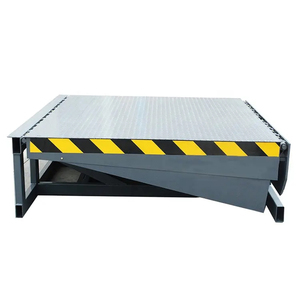
Importing heavy industrial equipment, hydraulic ramps, and automotive knocked-down (CKD) components. Requires Specialized Inspection Certificates (Quality Registration), Vessel Load Manifests, and heavy-lift road transport permits from Vietnam's Ministry of Transport.
Hanoi Urban Retail & E-Commerce Fulfillment
Supplying fast-moving consumer goods (FMCG) and cross-border e-commerce sellers. Utilizing bonded warehouses (Customs Warehouse Type 1) with reverse logistics document preparation, inventory recovery paperwork, and swift unit-level customs clearance.
Macro Logistics Trends & Regulatory Shifts in Northern Vietnam (2026 Focus)
Procurement leaders in Hanoi must adapt to evolving customs and trade policies between China and Vietnam. Key macro trends shaping documentation requirements include:
1. Strict Rules of Origin Verification (MOIT Inspections): Vietnam’s Ministry of Industry and Trade has escalated post-customs audit inspections on imported Chinese goods to prevent illegal transshipment. Factory documentation must provide auditable bill-of-materials (BOM) backing for Form E origin claims.
2. Paperless VNACCS Digital Integration: Vietnam Customs is mandating 100% digital submission of commercial documents prior to vessel or truck arrival. China factory suppliers must generate high-resolution OCR-scannable invoices and digital signatures to achieve green-channel (Luong Xanh) instant clearance.
3. Regional Comprehensive Economic Partnership (RCEP) Utilization: While ACFTA Form E remains dominant, RCEP cumulative rules of origin are gaining traction for complex multi-country supply chains spanning China, Vietnam, and ASEAN partners.
Why Global Importers Partner with Our China Documentation & Forwarding Network
Leveraging deep logistics experience and direct founder accountability, our operational infrastructure bridges Chinese manufacturing power with Vietnamese import demands seamlessly.
Founder-Led Accountability
Founded by logistics veterans with over 20+ years of combined experience managing multi-modal operations across international trade lanes. Every customer account is overseen by senior leadership, guaranteeing rapid resolution of customs queries without multi-tiered call centers.
Multilingual Operational Desk
Communication friction is eliminated. Our professional team conducts business fluently across English, Chinese, Vietnamese, and Spanish—ensuring direct, precise dialogue with Chinese factories, shipping lines, and Vietnamese customs officials.
Integrated Factory-to-Door Network
Beyond issuing commercial paperwork, we coordinate origin pickup in mainland China, export declaration (GACC), ocean/land carriage, VNACCS submission, and final-mile inland trucking directly to warehouses in Hanoi, Hai Phong, and Bac Ninh.
Frequently Asked Questions for Hanoi Procurement Managers
Answers to crucial compliance, documentation, and operational questions when sourcing from China suppliers.
What is the standard SLA for preparing ACFTA Form E and Commercial Documentation for Hanoi bound cargo?
How do you handle HS code discrepancies between China Customs (GACC) and Vietnam Customs (GDVC)?
Can Form E be issued retroactively if cargo has already arrived at Hai Phong or Huu Nghi border?
What documents are required for clearing specialized machinery (e.g., hydraulic ramps, cold storage units)?
How does your reverse logistics documentation service work for returned e-commerce products?
What Incoterms do you recommend for first-time Chinese goods importers in Hanoi?
Streamline Your China-to-Hanoi Cargo Documentation Today
Eliminate customs delays, secure preferential tariff duties, and partner with China's leading commercial documentation and logistics experts. Receive a detailed quotation and document audit within 24 hours.