Integrated Supply Chain Portfolio
Customs-Bonded & International Logistics Solutions
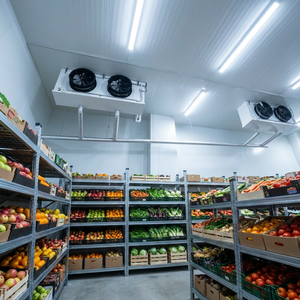
Cold Chain Logistics Cold Storage Warehouse for Fresh Produce and Food Distribution
Inquire Now
Cheapest Logistics Shipping Rates Courier Service To Door USA Europe Sea Air Express Cargo Delivery Agent DDP Freight Forwarder
Inquire Now
Secure FBA Shipping Logistics Agent Cold Chain From Shenzhen To New Zealand Japan Greece Mexico Morocco Turkey France
Inquire Now
Temperature-Controlled Logistics - China to USA/UK/France Cold Chain Air/Sea Freight
Inquire Now
Forwarder Shipping From China To Australia DDP Sea Freight LCL Container Shipping For Bulk Pallets Heavy Cargo To AU Warehouses
Inquire Now
UK Returns Management China Costeffective Reverse Logistics Solution for Central Processing Ecommerce Returns Air+Express
Inquire Now
Professional DDP Shipping Service China to USA with Automated Sorting & Express Last-mile Delivery
Inquire Now100%
Duty & GST Deferral Until Dispatch
Sub-79/80
ABF Licensed Customs Depots
20+ Yrs
Combined Logistics Leadership
24/7
Integrated IoT Temperature Control
Strategic Whitepaper
Optimizing Australian Supply Chains Through Bonded Warehousing Architecture
For modern manufacturers, industrial factories, and global trade enterprises operating across Australia, regulatory compliance and cash flow optimization represent the dual pillars of sustainable expansion. A bonded warehouse—operating under strict licensing from the Australian Border Force (ABF) pursuant to Section 79 or Section 80 of the Customs Act 1901—serves as a secure zone where imported goods may be stored, processed, or manipulated without immediate payment of customs duty or Goods and Services Tax (GST).
In an economic landscape defined by volatile freight tariffs, stringent biosecurity mandates, and heightened holding costs across major Australian gateways—including Sydney (Port Botany), Melbourne, Brisbane, and Fremantle—utilizing custom-engineered bonded warehousing services allows manufacturing entities to convert inventory holding from a capital-draining liability into a strategic operational buffer. By leveraging duty deferral, international brands and local OEMs achieve significant financial liquidity while maintaining continuous inventory readiness.
Working Capital Optimization
Defer import customs duty and 10% GST payments until products leave the bonded facility for domestic consumption in Australia, significantly improving corporate cash flow reserves.
ABF & Biosecurity Compliance
Fully compliant with Department of Agriculture, Fisheries and Forestry (DAFF) standards and ABF Section 79/80 provisions, mitigating detention risk and regulatory penalties.
Re-Export Duty Exemption
Goods imported into Australia, stored in bond, and subsequently re-exported to Oceania, New Zealand, or the South Pacific incur zero Australian customs duties or domestic taxes.
Localized Industry Solutions
Strategic Application Scenarios Across Australian Industrial Sectors
Tailored bonded warehousing infrastructure designed to meet the rigorous operational requirements of Australia’s primary economic engines.
1. Mining, Heavy Machinery & Energy in Western Australia & Queensland
Australia’s vast mining operations in the Pilbara (WA) and Bowen Basin (QLD) require continuous staging of expensive replacement components, heavy machinery assemblies, and drill bits imported from OEM hubs worldwide. Holding high-value spares in custom-bonded warehouses near Perth or Brisbane allows mining conglomerates to store multi-million dollar component reserves duty-free until scheduled maintenance deployment, preventing capital lockup.
2. Cold-Chain Perishables, Agriculture & Pharmaceuticals
Australia maintains strict biosecurity and cold-chain integrity standards. Temperature-controlled bonded logistics hubs located adjacent to Melbourne Airport (Tullamarine) and Sydney (Port Botany) provide specialized cold storage under customs supervision. This enables seamless quarantine inspection, duty-deferred staging of imported active pharmaceutical ingredients (APIs), and compliant distribution of fresh protein exports.
3. Wine, Spirits & High-Excise Commercial Goods
South Australia and Victoria lead Australia’s wine trade, alongside growing imports of premium international spirits. Under Australian tax law, excise tax and the Wine Equalisation Tax (WET) place immense financial pressure on importers. Bonded warehousing defers excise liabilities until domestic release, while enabling re-export to APAC markets with zero tax overhead.
4. E-Commerce Fulfillment & Reverse Logistics hubs
With cross-border e-commerce expanding exponentially across Australia and New Zealand, international retailers utilize bonded facilities for automated pick-and-pack, last-mile sorting, and central processing of regional returns. Undelivered or returned goods can be re-consolidated inside the bonded enclave without triggering unnecessary double-taxation.
Future Outlook
Key Market & Regulatory Trends Shaping Australian Logistics (2025–2030)
The Australian warehousing and logistics landscape is undergoing a digital and structural transformation driven by modernized border controls, environmental mandates, and geopolitical realignments across the Asia-Pacific region.
ABF Automated Customs Single Window
The Australian Border Force is accelerating the adoption of AI-assisted entry processing. Integrated bonded management systems must interface directly with the Integrated Cargo System (ICS), enabling real-time cargo reporting, automated risk profiling, and instant clearance releases.
ESG & Net-Zero Green Logistics Enclaves
Major Australian port precincts (such as Port of Melbourne’s Webb Dock and Port Botany) are enforcing strict ESG metrics. Modern bonded manufacturing facilities are integrating roof-mounted solar PV systems, electrified material handling equipment (MHE), and carbon-neutral warehousing protocols.
Regional Supply Chain Realignment (FTAs)
Leveraging trade agreements like RCEP, ChAFTA, and IA-CEPA, manufacturers increasingly utilize Australian bonded warehouses as secure transshipment hubs. Staging components in Australia provides a transparent, low-risk jurisdiction for regional distribution into Oceania.
Financial & Operational Comparison
Bonded Warehousing vs. Standard Commercial Storage in Australia
A detailed breakdown of tax impact, compliance requirements, and flexibility for enterprise buyers.
| Evaluation Feature | ABF Bonded Warehouse (Sec 79/80) | Standard Commercial Storage |
|---|---|---|
| Duty & GST Payment | Deferred until domestic release | Immediate payment upon customs entry |
| Re-Export Tax Impact | 0% Duty / GST on re-exported goods | Requires complex Duty Drawback claims |
| Biosecurity Inspection | Integrated DAFF / ABF inspection on-site | Off-site transport to approved arrangements |
| Customs Audit & Traceability | 100% itemized inventory tracking via ICS | Standard ERP tracking (no border integration) |
| Excise Goods Processing | Supported under excise bond conditions | Prohibited without upfront excise payment |
| Working Capital Liquidity | Maximum – capital remains unencumbered | Restricted – cash tied up in pre-paid taxes |
Enterprise Capabilities
Why Leading Global Manufacturers Partner with Our Logistics Network
Combining hands-on founder accountability with multi-modal global transportation coverage.
Direct Founder Accountability
Operated with a family-forwarder ethos. Our founders—Marcus Vinícius Soares and Marco Junior—bring over two decades of combined operational experience, ensuring your account receives direct leadership oversight, rapid decisions, and transparent status reporting.
Multilingual Cross-Border Desk
Seamless operational support delivered in English, Portuguese, and Spanish. We streamline communication between global manufacturing facilities, customs authorities, ocean lines, and Australian final-mile transport carriers.
End-to-End DDP & Reverse Logistics
From factory floor origin (China, Americas, Europe) to Australian customs-bonded storage and final-mile automated distribution, we manage FCL, LCL, air cargo, and complex reverse logistics under a single unified SLA.
Buyer Knowledge Base
Frequently Asked Questions on Australian Bonded Warehousing
Essential guidance for logistics directors, customs brokers, and procurement managers.
What is the difference between an ABF Section 79 and Section 80 Bonded Warehouse?
Under the Australian Customs Act 1901, a Section 79 license applies to general customs warehouses used for storing, sorting, packing, or conducting minor manufacturing operations on duty-unpaid goods. A Section 80 license specifically governs warehouses used for the storage of goods under special conditions, such as duty-free shops or specific aircraft/ship stores. Most industrial manufacturers rely on Section 79 licensed facilities for commercial inventory storage and value-added processing.
How long can imported goods remain stored in an Australian bonded warehouse?
Goods may typically remain in an Australian bonded warehouse indefinitely, provided the facility maintains active ABF authorization and strict inventory logging compliance. However, specific commercial goods or perishable food items subject to Department of Agriculture, Fisheries and Forestry (DAFF) regulations may carry defined shelf-life limits or mandatory inspection timelines.
Can manufacturing or assembly operations take place inside a bonded warehouse?
Yes. With explicit authorization from the Australian Border Force under Section 79, manufacturers can carry out value-added operations inside the bonded environment. This includes repackaging, relabeling, quality testing, industrial kitting, and light assembly. Duties are calculated based on the finished components or raw materials released into the Australian market.
How does GST deferral work when releasing goods from bond?
When goods are removed from a bonded warehouse for domestic consumption in Australia, an Nature 3 entry (N3) is lodged with the ABF. At this exact moment, applicable customs duties and the 10% Goods and Services Tax (GST) become payable. Importers enrolled in the Australian Taxation Office (ATO) Deferred GST Scheme can further defer GST reporting to their regular Business Activity Statement (BAS), maximizing working capital advantages.
What documentation is required to initiate bonded storage in Australia?
To move cargo into bond, you must provide: (1) Commercial Invoice detailing line-item values and 6-digit HS Codes, (2) Packing List specifying weights and dimensions, (3) Bill of Lading (Ocean) or Air Waybill (Air), (4) Manufacturer’s Packing Declaration for biosecurity compliance, and (5) A Nature 2 entry (N2) customs declaration lodging intent to warehouse under bond.
How are re-exported goods treated from a bonded warehouse?
Goods that enter an Australian bonded warehouse and are subsequently re-exported to an overseas destination (such as New Zealand, Fiji, or Papua New Guinea) are exempt from Australian import duties and GST. The transaction is cleared via an export entry declaration, bypassing Australian domestic tax liabilities entirely.
Optimize Your Australian Supply Chain Today
Connect with our senior customs and bonded warehouse specialists to discuss duty deferral strategies, ABF compliance, and tailored cold-chain distribution across Australia.
Inquire Now