Verified Industrial Products & Logistics Solutions
Deploying advanced cargo handling, structural warehousing, and compliant DDP shipping frameworks tailored for China-to-Global trade lines.


Navigating China Tariff Classification Services: Executive Compliance Whitepaper
In the modern landscape of international trade, tariff classification compliance represents the structural foundation of global supply chain efficiency. When sourcing manufactured goods, cold chain logistics systems, warehouse equipment, or automated sorting solutions from China, accurate classification under the Harmonized Commodity Description and Coding System (HS Code) dictates not only your duty rate structure but also regulatory admissibility, duty drawback opportunities, and vulnerability to severe customs enforcement penalties.
The World Customs Organization (WCO) nomenclature undergoes mandatory updates every five years, with national tariff schedules—such as the Harmonized Tariff Schedule of the United States (HTSUS) and the Integrated Tariff of the European Communities (TARIC)—evolving even more frequently. A single digitized digit error in a 10-digit tariff code can lead to multi-million-dollar retroactive duty assessments under Section 301 tariffs, Anti-Dumping Duty (ADD) enforcement, or Countervailing Duty (CVD) audits. Specialized tariff classification services operating out of China provide enterprise buyers with the regulatory precision required to insulate cross-border operations against systemic exposure.
Legal Certainty
Binding Ruling Applications (Advance Rulings) secured through China Customs (GACC) and destination agencies (e.g., U.S. CBP) to lock in duty rates prior to factory dispatch.
Tariff Engineering
Strategic product specifications adjustment during manufacturing in China factories to legally qualify items under lower-duty subheadings without altering functional integrity.
Duty Mitigation
Comprehensive utilization of Bonded Logistics Centers (BLC), Free Trade Zone (FTZ) entry standards, and legal First Sale Rule valuation methodologies.
The Mechanics of Legal HS Code Determination: General Rules of Interpretation (GRI)
Systematic tariff classification is strictly governed by international customs law using the General Rules for the Interpretation (GRI) of the Harmonized System. Enterprise sourcing agents and China logistics factories must apply these rules in strict sequential order:
| Rule | Legal Principle | Practical Application in China Manufacturing & Logistics |
|---|---|---|
| GRI 1 | Terms of Headings & Section/Chapter Notes | Classification is first determined according to the literal terms of the headings and relative Section and Chapter notes. If a heading specifically names a machine (e.g., "Hydraulic Vertical Lift"), it governs over general descriptions. |
| GRI 2(a) | Incomplete or Unfinished Goods | Articles presented incomplete or disassembled (CKD/SKD kits shipped from factories) are classified as complete items if they possess the essential character of the finished product. |
| GRI 2(b) | Mixtures & Composite Materials | Applies to goods consisting of more than one material or substance. Governs raw materials, steel structures mixed with specialized electrical components. |
| GRI 3(a) | Most Specific Description | When goods are classifiable under two or more headings, the heading providing the most specific description takes precedence over general coverage subheadings. |
| GRI 3(b) | Essential Character Test | Composite goods, multi-component sets, or packaged fulfillment kits are classified by the component that imparts their "essential character" (e.g., thermal insulation unit in refrigerated containers). |
| GRI 6 | Subheading Determination | Legal comparison of subheadings at the 6-digit level and beyond must occur strictly between subheadings at the same indentation level. |
Future Procurement & Sourcing Trends in Tariff Classification (2025–2030)
As international supply chains shift toward heightened transparency and digital compliance integration, global procurement teams sourcing from China are adapting to three major market shifts:
1. AI-Powered Classification Engines Backed by Licensed Brokers
Modern enterprise procurement no longer relies on static PDF lookup tables. Leading factories and logistics providers in China deploy Machine Learning (ML) natural language processing tools trained on millions of past customs rulings, CBP CROSS database decisions, and GACC guidelines. However, to fulfill the legal mandate of Reasonable Care mandated by the US Customs Modernization Act (Mod Act), AI suggestions are strictly validated by licensed customs brokers and trade attorneys before document filing.
2. De Minimis Regulatory Shift and Strict DDP Formal Clearance
With global customs authorities (notably U.S. CBP, EU tax authorities, and UK HMRC) scrutinizing low-value direct-to-consumer e-commerce packages, the historical reliance on informal entry de minimis exceptions (such as U.S. Section 321) is rapidly declining. Sourcing teams are turning to Formal Customs Clearance DDP Air & Ocean Freight Services, where complete 10-digit tariff classification, Automated Broker Interface (ABI) transmissions, and duty pay-through are established prior to export loading.
3. Integrated Heavy Infrastructure & Warehouse Pre-Classification
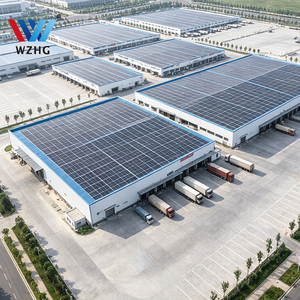
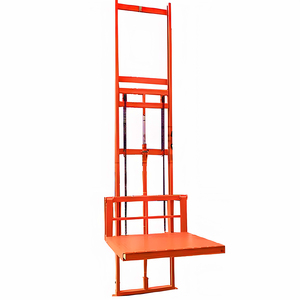
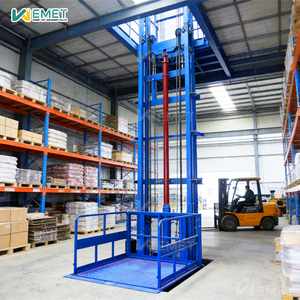
Procurement of complex logistics hardware—such as Steel Structure Warehouses with custom loading bays or 16m Hydraulic Vertical Freight Lifts—requires physical facility integration. Modern China factories now offer factory-level pre-classification certificates, detailed BOM (Bill of Materials) breakdowns, and pre-filed mechanical drawings to ensure seamless customs entry without unexpected re-classification at destination ports.
The 2M Freight & Strategic Logistics Enterprise Advantage
Rooted in family ownership and anchored by deep operational capabilities across Miami, FL, and major China manufacturing hubs (Shenzhen, Ningbo, Shanghai, Guangzhou), our enterprise model merges personal executive accountability with rigorous international trade compliance infrastructure.
Founder-Led Accountability
Founded by logistics veterans Marcus Vinícius Soares and Marco Junior, every strategic account receives personal oversight from founders with over two decades of international freight operations leadership.
Multilingual Regulatory Team
Direct native-level communication across English, Spanish, Portuguese, and Chinese ensures flawless coordination between China factory floors, ocean carriers, and Latin America / U.S. customs brokers.
Audit-Ready Documentation
Every DDP shipment, cold chain container deployment, and warehouse machinery order includes complete audit-proof compliance binders containing commercial invoices, packing lists, entry summaries (CBP Form 7501), and classification legal memos.
Frequently Asked Questions (FAQ) for China Tariff & Logistics Procurement
Answering key operational questions for importers, global procurement directors, and cross-border trade managers.
What is the difference between China Customs HS Codes (CIQ) and U.S. HTS Codes?
While the first 6 digits of an HS Code are harmonized globally under the World Customs Organization (WCO) system, individual nations customize the remaining 2 to 4 digits for statistical tracking and tariff assessments. China uses a 13-digit code system (including inspection codes), whereas the U.S. uses a 10-digit HTSUS code. A tariff classification service ensures your product correctly maps from the export declaration code in China (GACC) to the destination entry code (US CBP or EU TARIC).
How do Section 301 tariffs impact factory procurement from China?
Section 301 tariffs impose additional duty rates (ranging from 7.5% to 25%+) on thousands of Chinese-origin subheadings entering the United States. Accurate classification determines whether your specific product falls under a List 1, 2, 3, or 4 tariff line or qualifies for specific statutory exclusion categories or tariff engineering adjustments prior to factory export.
What is DDP (Delivered Duty Paid) shipping, and why is compliant classification vital?
Under DDP terms, the seller/freight forwarder assumes all risks, duties, and customs clearance obligations until delivery to the buyer’s door. Compliant classification ensures that all import customs duties, taxes, and security filings are accurately calculated upfront. This prevents unexpected customs holds, storage demurrage fees, or redelivery fines at destination ports.
How are warehouse hydraulic freight lifts classified under the Harmonized Tariff Schedule?
Hydraulic vertical freight lifts and cargo elevators are generally classified under Heading 8428 (Other lifting, handling, loading or unloading machinery). Depending on electrical control systems, structural Q235 steel integration, and mechanical elevation mechanisms, specific subheadings (such as 8428.10 or 8428.90) apply. Proper BOM breakdown isolates non-dutiable structural steel components when applicable.
Why is cold chain equipment classification critical for global pharmaceutical & fresh produce trade?
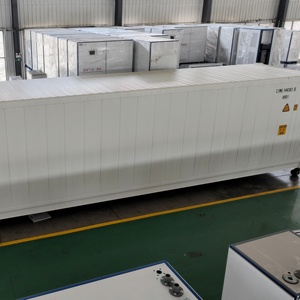
Refrigerated container cold storage units involve complex electro-mechanical assemblies incorporating compressors, thermal insulation panels, and temperature control electronics. Correct classification under Heading 8418 (Refrigerators, freezers and other refrigerating equipment) vs. Heading 8609 (Containers for freight transport) dictates eligibility for specific safety certifications, environmental refrigerant quotas (such as EPA Section 608 compliance), and duty rates.
What happens if customs authorities audit and reject a tariff classification?
If customs authorities (such as U.S. CBP via a CF-28 Request for Information or CF-29 Notice of Action) reject a classification, the importer may face retroactive duty demands, statutory interest penalties, and civil fines under regulations like 19 U.S.C. § 1592. Utilizing professional classification factories and binding rulings establishes Reasonable Care, which acts as a primary legal defense against willful negligence penalties.
Optimize Your China Tariff Classification & Global Logistics Strategy
Connect directly with our senior trade compliance experts and founders. Request tailored product catalogs, binding ruling consultation, or complete ocean/air freight quote matrices today.
Get Catalog