Enterprise Fleet & Cargo Services
Recommended Ocean Cargo Transport Solutions
Direct port allocations, standardized container specifications, and integrated last-mile freight forwarding services from China to global destinations.
Cheapest Logistics Shipping Rates FBA Courier Service To Door Usa/Europe/Uk Sea/Express Cargo Agent China Freight Forward
Send an Inquiry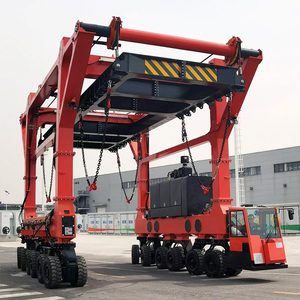
Heavy Duty Container Straddle Carrier for Efficient Port Terminal Container Handling and Transport
Send an Inquiry
DDP Door-to-door Delivery Express Sea Freight Forwarder Transport Cargo China To Worldwide Shipping Agent Logistics Services
Send an Inquiry
Germany France Buyer Private Logistics Agent Customs Duty Optimization VAT Compliance Tax Refund Services
Send an Inquiry
China to USA Shipping Agent with DDP Customs Clearance Warehouse Fulfillment and Last Mile Delivery Service
Send an Inquiry
China to USA Ocean Shipping Service City Logistics Last Mile Delivery FBA Inbound Warehousing Trucking
Send an Inquiry
Shanghai Europe America Cross-Border E-Commerce Reverse Logistics Return Line Forwarder Shipping Via Maticexpress LCL+Express
Send an Inquiry
Executive Supply Chain Strategy
Navigating Global Maritime Logistics with Enterprise Rigor
As global trade networks evolve amidst regulatory shifts, geopolitical realignment, and fuel transitions, selecting a qualified China sea cargo transport manufacturer & supplier requires evaluating end-to-end operational transparency, vessel space guarantees, and legal compliance frameworks.
Founder-Led Accountability
Built upon the legacy of founders Marcus Vinicius Soares and Marco Junior—who previously orchestrated mega-scale freight operations in Brazil and managed multimodal rail networks—our firm delivers personal executive oversight for every ocean container. Unlike automated booking portals, your cargo is monitored by seasoned logistics directors.
Trilingual Regulatory Expertise
Operating fluently across English, Portuguese, and Spanish, our trade liaisons dismantle international friction points between Asian manufacturing ports (Shanghai, Ningbo, Shenzhen, Qingdao) and gateway destinations across North America (Miami/Doral hub), Europe, and Latin America (Santos, Buenos Aires).
Tax & Customs Duty Optimization
Our specialized customs engineering teams in Germany, France, and the United States assist buyers with complex tariff classification (HS Code mapping), VAT compliance, import duty drawbacks, and legal tax refund mechanisms—substantially lowering landed costs on DDP and DAP shipments.
Technical Engineering & Logistics Modes
China Sea Cargo Transport Capability Matrix
Choosing the optimal freight structure requires a granular understanding of container payload engineering, transit velocity, customs risk allocation, and total cost of ownership (TCO).
| Ocean Freight Service Mode | Container & Fleet Specification | Optimal Freight Volume / Weight | Primary Buyer Advantage | Customs & Risk Profile |
|---|---|---|---|---|
| Full Container Load (FCL) | 20GP (33 CBM), 40GP (67 CBM), 40HQ (76 CBM), 45HQ (86 CBM) | > 15 CBM or Heavy Machinery (> 12 Tons) | Lowest per-CBM unit rate, zero risk of co-loader contamination, direct port-to-port velocity. | Single Bill of Lading (B/L). Fast track clearance at destination ports. |
| Less Container Load (LCL) | Shared Consolidation Box (Co-loaded in Shanghai/Ningbo Hubs) | 1 CBM to 15 CBM | Pay-per-use volume flexibility; no need to wait for full container production runs. | Consolidated manifest. Requires warehouse de-consolidation (CFS stage). |
| DDP Door-to-Door Express | Combined Ocean Shipping + Direct Trucking/Express Intermodal | Small-to-Mid B2B Shipments & FBA Inbound | All-inclusive rate covering freight, tariffs, customs clearance, and last-mile delivery. | Forwarder handles seller/buyer import records, tariff payment, and bond filings. |
| Reverse Logistics & E-Commerce Returns | Maticexpress LCL + Dedicated Return Express Channels | E-Commerce Batches & Returned Inventory | Automated return processing, inspection, repackaging, and re-exportation handling. | Duty drawback eligible; specialized tax refund and VAT compliance frameworks. |
Require a Custom Ocean Freight Engineering Plan?
Speak directly with our senior logistics architects to calculate payload optimization and route efficiency for your next vessel booking.
Strategic Procurement Intelligence
Future Procurement Trends in Sea Cargo Transport
Modern enterprise procurement directors must look beyond immediate spot-market ocean quotes. The next decade of China-to-global ocean shipping will be defined by regulatory decarbonization, AI-driven capacity forecasting, and dynamic risk hedging.
1. Mandatory Decarbonization & IMO CII Compliance
The International Maritime Organization's (IMO) Carbon Intensity Indicator (CII) and Energy Efficiency Existing Ship Index (EEXI) regulations are forcing ocean carriers to phase out older, inefficient vessels or reduce cruising speeds (slow-steaming). B2B buyers must prepare for tiered freight pricing, where green-flagged vessels running on dual-fuel LNG, green methanol, or bio-ammonia command green surcharges but deliver verified carbon-offset telemetry required for Scope 3 ESG reporting.
2. Transition from Spot Rate Gambling to Index-Linked Contracts
Extreme volatility in ocean freight rates—driven by regional channel disruptions, weather events, and carrier blank sailing programs—has rendered traditional annual fixed-rate contracts vulnerable to default. Forward-thinking enterprise importers are adopting index-linked contracts (tied to SCFI or FBX indices) featuring dynamic bunker adjustment factors (BAF) and guaranteed equipment/slot allocation guarantees during peak shipping windows.
3. Real-Time Telemetry & IoT-Enabled Smart Containers
Procurement contracts increasingly mandate real-time visibility into high-value cargo. Modern container fleets deployed across China-US and China-EU trade lanes are being retrofitted with autonomous IoT sensor arrays. These devices stream real-time data on container GPS coordinates, internal temperature, humidity spikes, door opening alerts, and g-force shock impacts, enabling proactive supply chain risk mitigation.
4. Integration of Port Equipment Automations
Port congestion at key international gateway hubs is being addressed through port terminal automation. Advanced heavy-duty container straddle carriers, automated guided vehicles (AGVs), and automated stacking cranes (ASCs) are drastically reducing vessel turn-around times and container dwell times. Sourcing logistics partners who operate within tech-enabled terminal eco-systems ensures faster container release.
Industry Evolution & Macro Trends
Sea Freight Product & Service Development Trends
The structural transformation of manufacturing and cross-border e-commerce is driving rapid evolution in ocean cargo transport solutions originate out of China's primary industrial zones.
End-to-End DDP Customization
The traditional boundary between ocean freight forwarders and customs brokers has dissolved. Manufacturers and buyers now demand unified Door-to-Door DDP architectures where a single logistics partner handles factory pickup in China, port loading, sea transit, destination customs clearance, tariff pre-payment, and final-mile drayage or warehouse delivery.
Specialized Cold Chain & Reefer Tech
With growing international trade in temperature-sensitive chemicals, electronic components, pharmaceuticals, and perishable agricultural commodities, ocean transport providers are expanding active reefer container solutions featuring precise atmosphere control (CA) and dynamic humidity regulation systems.
Cross-Border Reverse Logistics Lines
The explosive rise of global e-commerce has highlighted the necessity of streamlined return lines. Specialized services like 上海/Europe/America reverse logistics lines utilize hybrid LCL+Express models to process returned, damaged, or un-cleared inventory, allowing overseas merchants to reclaim residual product value without prohibitive freight friction.
Frequently Asked Questions
Comprehensive B2B Procurement FAQ
Clear, definitive answers to high-intent questions asked by supply chain managers, procurement officers, and international importers sourcing sea cargo transport from China.
What is the key structural difference between FCL and LCL sea freight when shipping from China?
Full Container Load (FCL) grants the buyer exclusive use of an entire ocean container (such as a 20GP, 40GP, or 40HQ). FCL is invoiced on a flat container rate, offers faster transit times because the container is sealed directly at the supplier's factory, and eliminates co-loader contamination risks. Less than Container Load (LCL) consolidates cargo from multiple shippers into a shared container. LCL is billed per Cubic Meter (CBM) or per 1,000 kg, making it highly cost-effective for shipments between 1 CBM and 15 CBM, though it requires additional transit buffer time (typically 3–5 days) for Container Freight Station (CFS) stuffing at origin and de-consolidation at destination.
How do DDP (Delivered Duty Paid) shipping services simplify customs clearance for US and European buyers?
Under DDP terms, the sea freight forwarder assumes full legal and financial responsibility for the shipment from origin factory pickup in China to final door delivery at the buyer's destination facility. The forwarder handles export clearance, ocean carriage, import customs brokerage, ISF filings, single-entry or continuous customs bonds, and payment of all destination import duties, tariffs (including US Section 301 tariffs), and local VAT/GST taxes. This eliminates administrative overhead for buyers and protects them from unexpected port demurrage or customs storage charges caused by documentation mismatches.
What documentation must be prepared before booking an ocean cargo container from China?
To ensure seamless customs clearance and prevent port delays, importers must ensure four core commercial documents are finalized: (1) Commercial Invoice stating itemized product descriptions, accurate Harmonized System (HS) codes, unit values, and transaction currencies; (2) Detailed Packing List outlining gross/net weight, package dimensions, and piece counts; (3) Master or House Bill of Lading (MBL/HBL) serving as the official title document and contract of carriage; and (4) Certificate of Origin (COO) where applicable to substantiate preferential trade tariffs or regional tax exemptions. Additional regulatory filings like MSDS (for battery/chemical goods) or FDA/CE compliance certificates may be required depending on product category.
How do customs duty optimization and VAT tax refund services work for Germany and France buyers?
European customs duty optimization involves verifying precise TARIC code classifications to prevent overpayment of baseline duties and utilizing bonded warehousing (Type Customs Warehouse) to defer VAT payments until goods enter free circulation. Specialized logistics agents assist buyers in establishing postponed VAT accounting (such as ATVAT in France or fiscal representation mechanisms in Germany), allowing companies to offset import VAT directly on their periodic VAT returns without creating negative cash flow hurdles. Furthermore, expert forwarders verify export tax refund compliance at China origin to lower upstream product sourcing costs.
What strategies can enterprise buyers implement to mitigate ocean freight rate volatility during peak seasons?
Enterprise importers should implement a dual-sourcing freight strategy: securing 60–70% of baseline volume under long-term index-linked contracts with guaranteed equipment protection (GRI/PSS caps) and placing the remaining 30–40% on the spot market to capitalize on rate dips. Additionally, booking container space 3 to 4 weeks prior to major production bottlenecks (such as Golden Week or Lunar New Year), utilizing secondary port gateways (e.g., routing US Midwest cargo through Gulf ports or West Coast intermodal corridors), and maintaining flexible cargo-ready dates significantly reduces exposure to premium surcharge spikes.
How do heavy-duty container straddle carriers enhance terminal handling efficiency at destination ports?
Container straddle carriers are specialized mobile gantry vehicles utilized in port container terminals to stack, transport, and load containers onto highway chassis or railcars. By straddling container stacks (up to 4-high), these machines eliminate the need for separate yard cranes and internal tractors. Ports equipped with high-efficiency straddle carrier fleets achieve faster vessel unloading rates, shorter drayage truck turnarounds, and reduced container dwell times—directly lowering container detention and demurrage risks for importers.