High-Performance Logistics & Customs Infrastructure
Explore vetted export execution modules, containerized logistics solutions, and enterprise cross-border services designed for high-volume trade lanes.


Executive White Paper: Navigating China Export Customs Brokerage Architecture
In an era defined by global regulatory realignments, stringent tariff enforcement, and complex cross-border trade compliance, sourcing from China requires far more than basic freight consolidation. It demands sophisticated China Export Customs Brokerage Solutions backed by deep regulatory expertise and institutional operational discipline.
The General Administration of Customs of the People's Republic of China (GACC) enforces intricate export classification frameworks, automated single-window declaration protocols, and rigorous valuation audits. Navigating these compliance hurdles requires specialized brokerage partners capable of mitigating shipment holds, preventing severe customs penalties, and securing valid export tax rebates (退税).
This white paper details the structural mechanics of top-tier China export customs brokerage suppliers, evaluating technical capabilities, multimodal freight integration, future regulatory shifts, and critical procurement criteria for international enterprise buyers.
Core Execution Modules of Tier-1 China Customs Brokers
Top export brokerage factories provide end-to-end operational coverage across major Chinese ports including Shenzhen, Ningbo, Shanghai, Guangzhou, and Qingdao.
Automated Single-Window Declaration
Direct EDI API integration with GACC's China National Single Window system. Enables real-time electronic declaration filing, rapid pre-clearance validation, and automated customs release (放行) within hours of container gate-in.
Multimodal FCL & LCL Integration
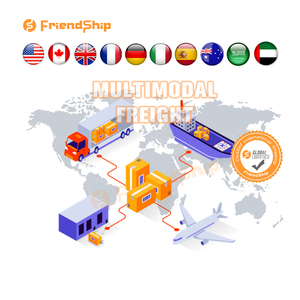
Seamless synchronization between export declarations and ocean/air/rail carriers. Whether executing 40HQ FCL sea freight, consolidated LCL cargo, or priority air freight out of Hong Kong, export documentation stays perfectly matched to carrier Bill of Lading (B/L) parameters.
HS Code Audit & Legal Compliance
Granular classification engineering for complex industrial machinery, chemicals, electronics, and consumer goods. Expert verification protects importers against false declarations, duty misclassifications, and compliance blockades in destination ports (US CBP, EU UCC, LATAM Receita Federal).
Project Cargo & Oversized Handling
Specialized customs clearance procedures for breakbulk cargo, out-of-gauge (OOG) machinery, heavy industrial equipment, and prefabricated modular structures. Includes port captain supervision and specialized low-boy flatbed dispatch.
Certificates of Origin & FTA Optimization
Expedited processing of official trade documentation, including CO (Form E, Form F, RCEP certificates), CIQ quality inspection certificates, fumigation documentation, and specialized export license validation.
Cross-Border E-Commerce & Reverse Logistics
Tailored 9610, 9710, and 9810 customs clearance models for Shopify dropshipping, Amazon FBA, and UK/EU/US returns management. Centralized processing hubs optimize duty refunds and re-export authorization.
Future Procurement & Industry Development Trends
Understanding structural changes in international customs, decarbonization mandates, and digitized compliance frameworks through 2030.
1. AI-Driven Compliance Auditing & OCR Verification
The traditional manual review of commercial invoices and packing lists is rapidly being replaced by high-throughput Machine Learning OCR engines. Leading China customs suppliers are integrating automated tariff matching systems that scan product specs directly against GACC historical audit databases. This eliminates human error, predicts inspection risks, and drastically reduces declaration latency.
Procurement Takeaway: Importers must prioritize suppliers with digitized document workflows that interface seamlessly with international ERP and WMS platforms via secure REST APIs.
2. ESG Integration & Carbon Border Adjustment (CBAM)
With the implementation of the European Union's Carbon Border Adjustment Mechanism (CBAM) and evolving US climate reporting policies, export customs declarations are expanding to incorporate carbon footprint metrics. Customs brokers are now tasked with reporting embedded emissions for raw steel, aluminum, fertilizers, and industrial components.
Procurement Takeaway: Global procurement directors should partner with freight forwarders and customs factories capable of generating verified carbon-indexed export documentation at the point of origin.
3. Nearshoring & Multi-Node Cross-Border Routing
As global enterprise supply chains diversify, transshipment architecture through Southeast Asia and Latin American hubs (such as Mexico, Brazil, and Costa Rica) has expanded exponentially. Customs brokerage is no longer a localized task; it requires synchronized dual-ended customs clearance (Origin Clearance + Destination DDP Compliance).
Procurement Takeaway: Modern buyers require global logistics partners possessing unified operational hubs in major trade gateway cities (such as Miami, FL) to coordinate origin export customs and destination import clearance under a single contract.
4. Heightened Enforcement of Non-Tariff Barriers & IP Protection
GACC is enforcing stricter controls over intellectual property rights (IPR) declarations and non-tariff technical barriers. Export shipments containing unauthorized trademarks, unverified battery chemistries (UN38.3 certification for cold-chain and lithium cargo), or missing mandatory safety testing face immediate detention and confiscation.
Procurement Takeaway: Ensure your brokerage supplier maintains dedicated compliance officers specializing in IPR registration and Dangerous Goods (DG) export validation prior to warehouse container stuffing.
Comparing Brokerage & Logistics Execution Models
Selecting the optimal partner requires assessing trade-offs across compliance risk, operational speed, cost structure, and account oversight.
| Evaluation Parameter | State-Owned Brokerage Firms | Local Port Booking Agents | Enterprise Founder-Led Forwarders (2M Model) |
|---|---|---|---|
| Declaration Speed | Standard (24–48 Hours) | Fast (12–24 Hours) | Ultra-Fast (< 6 Hours via API) |
| Accountability & Support | Automated Call Center / Low Flexibility | Limited Language & International Reach | Direct Founder Oversight / Multi-Lingual |
| DDP & Destination Logistics | Port-to-Port Only | Origin Port Only | Full End-to-End Door-to-Door (US/LATAM) |
| HS Code Risk Mitigation | Conservative / High Tariff Bias | Low Audit Capacity | Granular Classification Engineering |
| Cross-Border Multimodal Network | Rigid Carrier Contracts | Spot Market Focus | Vetted Global Network (Sea/Air/Rail) |
The 2M Freight & Logistics Advantage
Built upon decades of combined, hands-on logistics engineering, 2M Freight and Logistics bridges the operational gap between Asian manufacturing hubs and Western import corridors. Founded on personal accountability, 2M delivers high-touch, error-free customs brokerage and international transport execution.
Marcus Vinicius Soares
Over a decade of leadership managing large-scale freight operations in Brazil and the Americas. Marcus has personally overseen hundreds of logistics professionals and engineered global supply chains for multi-national enterprise accounts, specializing in high-compliance customs environments and port infrastructure management.
Marco Junior
A veteran international freight agent with extensive field experience directing complex rail, ocean, and air freight networks across international borders. Marco’s expertise encompasses project cargo consolidation, specialized heavy machinery transport, and frictionless cross-border trade execution.
China Export Customs Procurement FAQ
Answers to critical regulatory and operational questions faced by global procurement officers, supply chain managers, and importers.