Featured Heavy Lift Machinery & Breakbulk Logistics Products
Direct from audited Chinese export manufacturing hubs, port equipment terminals, and vetted freight forwarding infrastructures.
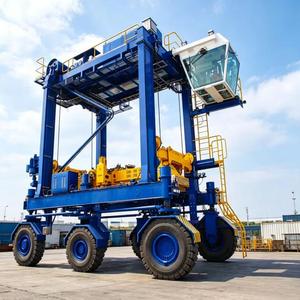
CE Certified Port Terminal Diesel Power Dual Drive Automatic 60 Ton Rubber Tyred Container Straddle Carrier Price
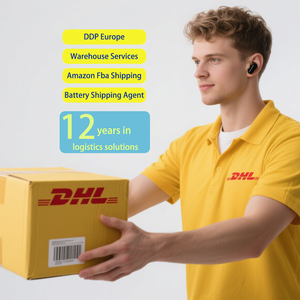
Transitaire Chine France UK Shipping Agent DDP Europe Electric Bicycle Logistics Last-Mile Delivery Services Insurance 6-10 Days
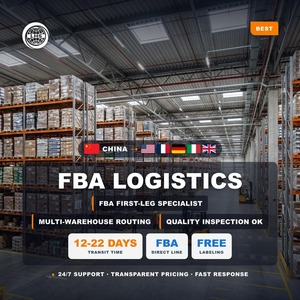
Secure FBA Shipping Logistics Agent Cold Chain From Shenzhen To New Zealand Japan Greece Mexico Morocco Turkey France
Customs Compliance Specialist - China to USA/UK/Italy Cargo Shipping & Documentation
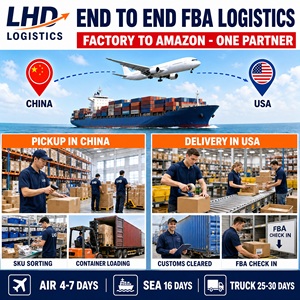
Freight Forwarder Amazon FBA USA Warehouse To China Logistics FCL Sea Container From Rates Fast Delivery Shipping Agent
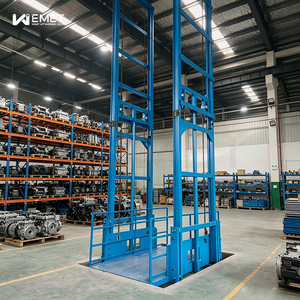
Industrial Heavy Duty Cargo Pallet Lift Platform Freight Elevator Warehouse Lift Machine Industrial Lift Elevator
Road Freight Forwarding FedEx Transportation From China to the World/US Cheapest Door-to-Door Express Air Freight Express
Forwarder Shipping From China to Canada DDP Sea Freight LCL Container Shipping for Bulk Pallets Heavy Cargo to AU Warehouses
Why Global EPC Buyers & Importers Partner With Us
Moving breakbulk cargo, oversized industrial elevators, and rubber-tyred straddle carriers requires absolute technical accountability. Unlike mega-brokers that route your heavy-lift project into automated ticketing systems, our organization provides executive-led logistics engineering from export factory origin to final jobsite destination.
Founder-Led Accountability
Led personally by co-founders Marcus Vinícius Soares (with over a decade of enterprise logistics management experience) and Marco Junior (international rail and multi-modal freight authority). Your project stays under direct founder supervision.
Tri-Lingual Operations Bridge
Seamless communication across English, Portuguese, and Spanish. We eliminate misunderstandings between Chinese exporting factories, carrier vessel captains, customs brokers, and Latin American/North American consignees.
Strategic Hub & Multimodal Mastery
Anchored out of our Miami, FL hub (Doral logistics corridor) alongside direct vessel chartering capabilities in main Chinese ports (Shenzhen, Shanghai, Ningbo, Qingdao, Tianjin), ensuring effortless FCL, Breakbulk, Ro-Ro, and DDP door-to-door delivery.
1 Business Day Action Guarantee
Every complex breakbulk inquiry, stowage plan assessment, or customs compliance review receives a comprehensive response within 24 hours directly from an operational principal.
Engineering Excellence in Chinese Breakbulk Cargo Exporting
As Chinese manufacturing evolves from standard consumer goods toward heavy industrial equipment—such as 60-ton rubber-tyred container straddle carriers, industrial freight elevator platforms, mining machinery, and power generation turbines—the demand for specialized breakbulk ocean shipping has reached unprecedented levels. Breakbulk cargo refers to goods that must be loaded individually onto a vessel in non-containerized units, bags, boxes, crates, or drums, or as out-of-gauge (OOG) heavy lifts.
Navigating the global supply chain for heavy machinery manufactured in China requires deep technical competence in several key engineering domains:
1. Vessel Selection & Stowage Engineering
Choosing between Multipurpose Vessels (MPVs), Heavy-Lift Vessels equipped with shipboard cranes (up to 1,500 mt tandem lifting capacity), Roll-on/Roll-off (Ro-Ro) carriers, and Flat-Rack / Open-Top containerized transport depends on cargo dimensions, gross weight, and structural lifting points.
- Breakbulk Chartering (Full/Part Charter): Essential for items exceeding 100 metric tons or dimensions that bypass standard liner container dimensions. Direct booking with tramp vessel owners guarantees quay-to-quay control.
- Ro-Ro Vessel Transport: Recommended for self-propelled or towable port terminal equipment (e.g., rubber-tyred straddle carriers, heavy haul trailers), minimizing hook-and-line risk during loading.
- Flat Rack (FR) & Open Top (OT) Integration: Ideal for industrial cargo where height or width slightly exceeds standard ISO container frames (40ft High Cube), allowing seamless ocean transport on container vessels.
2. Cargo Lashing, Securing & Seaworthy Packaging Protocols
Maritime transport subjects heavy breakbulk items to multi-axial forces, including rolling, pitching, heaving, and green-water stress. Compliance with the International Maritime Organization (IMO) Code of Safe Practice for Cargo Stowage and Securing (CSS Code) Annex 13 is mandatory.
- Structural Lashing Calculation: Turnbuckles, heavy-duty chains (Grade 80 or 100), and D-ring welding must match calculated transverse, longitudinal, and vertical acceleration forces.
- Export Corrosion Protection: VCI (Vapor Corrosion Inhibitor) heat-shrink wrapping, heavy-duty wooden skids (compliant with ISPM-15 heat treatment), and desiccant placement prevent saltwater mist degradation during transit across moisture-heavy equatorial ocean lanes.
- Weight Distribution & Load-Bearing Analysis: Calculating point-loading restrictions on vessel tanktops and deck hatches ensures that concentrated weights (such as heavy industrial lift elevators) are distributed using dunnage, steel beams, or timber beds.
Breakbulk vs. Alternative Heavy Cargo Transport Modes
Evaluating ocean logistics strategies for Chinese heavy machinery export based on cost, lead time, and risk profile.
| Transport Mode | Max Weight / Dimensions | Primary Advantages | Cost Structure | Risk & Handling Profile |
|---|---|---|---|---|
| Breakbulk MPV Charter | Unlimited (Up to 1,000+ Tons) | Handles massive non-containerable structures; direct port routing. | High charter base; low cost per weight unit on mega-projects. | Requires expert surveyor on-dock lifting supervision. |
| Roll-on / Roll-off (Ro-Ro) | Driven / Towable Units (Up to 120 Tons) | Zero crane lifting risk; enclosed deck protection from sea spray. | Predictable tariff based on Lane-Meters or Volume. | Extremely low cargo damage rate; strict self-propulsion rules. |
| OOG Container Flat Rack | Up to 45-50 Tons per unit | Fixed container liner schedules; broad global port coverage. | High slot premium & out-of-gauge surcharge fees. | Moderate risk; exposed to side container clearance issues. |
| DDP Multimodal Express | Palletized & Modular Heavy Cargo | Includes customs clearance, inland trucking, door delivery. | All-inclusive door-to-door rate per KG or CBM. | Lowest administrative burden for end-buyer. |
Sourcing & Procurement Trends for China Breakbulk Cargo (2025–2030)
Global industrial buyers, engineering, procurement, and construction (EPC) contractors, and terminal operators are altering their sourcing models from Chinese factories. Understanding these macro shifts ensures resilient, cost-optimized supply chain architectures.
1. Modular Factory Assembly
Chinese OEM factories increasingly pre-assemble heavy industrial machinery (e.g., 60T container straddle carriers, freight lift platforms) in modular blocks at coastal facilities (Nantong, Qingdao, Zhuhai) to allow direct barge-to-ship loading, slashing destination site assembly labor by up to 40%.
2. Digital Twin & Telematics
Sensors attached to heavy lift breakbulk frames now log real-time shock, tilt, vibration, and humidity during ocean transit across the Pacific and Atlantic, transmitting data via satellite to give buyers complete transparency over cargo stress loads.
3. Direct DDP & Cold Chain Growth
Breakbulk and project cargo sourcing is no longer limited to port-to-port Incoterms (FOB/CFR). Exporters and specialized forwarders now manage end-to-end DDP (Delivered Duty Paid) frameworks including last-mile low-boy heavy transport and customs clearance in North America, Europe, and Latin America.
Technical Best Practices for Heavy Cargo Buyers
- Mandatory Pre-Shipment Inspection (PSI): Engage marine surveyors at Chinese manufacturing facilities prior to factory gate out to inspect lifting lugs, center of gravity markings, and structural welds.
- Incoterms Selection: Transitioning from FOB to DAP/DDP transfers ocean risk and demurrage exposure away from the buyer, shifting vessel chartering responsibilities to experienced freight forwarding principals.
- Port Berth Pre-Booking: High-density ports in North America and Latin America require early booking of heavy-lift floating cranes or shore cranes to avoid expensive vessel waiting time (demurrage costs ranging from $15,000 to $45,000 per day).
Customs Compliance, Documentation & Trade Risk Mitigation
Exporting complex industrial equipment, electric vehicle logistics components, or specialized cold chain machinery from China to markets like the USA, EU, UK, and Latin America demands zero tolerance for documentation errors. Improper tariff classification or non-compliant bills of lading cause severe border delays, customs holds, and punitive financial fines.
Essential Documentation Checklist for Breakbulk & Heavy Cargo:
- Master Bill of Lading (MBL) with Clean on Board Notation: Must explicitly outline heavy lift surcharges, deck stowage clauses ("On Deck at Shipper's Risk" vs. "Under Deck Stowage"), and precise piece count / metric tonnage.
- Commercial Invoice & Detailed Packing List: Must feature granular HS code breakdowns for each machinery component (e.g., dual-drive diesel engines vs. rubber tyres vs. hydraulic lift frames).
- Method 1 / Method 2 Verified Gross Mass (VGM) Certificate: SOLAS compliant weight verification to prevent crane capacity overruns during shipboard loading.
- Certificate of Origin (Form E, Form F, or General CO): Crucial for preferential tariff treatment under bilateral trade agreements.
- CE Marking & Machinery Directive Declarations: Mandatory compliance for equipment entering European Union (EU) or UK markets (UKCA marking).
Working alongside a dedicated Customs Compliance Specialist ensures that anti-dumping duties, Section 301 tariffs (for US imports), and local VAT structures (such as DDP Europe last-mile deliveries) are properly calculated and pre-cleared before the ocean vessel berths at the port of discharge.
Frequently Asked Questions (FAQ) for Global Machinery Buyers
Clear, direct answers regarding breakbulk chartering, heavy equipment ocean freight, and Chinese export shipping logistics.
What defines breakbulk cargo versus standard containerized freight?
How are heavy equipment products like 60-ton Rubber Tyred Straddle Carriers shipped from China?
What information is required to receive an accurate breakbulk ocean freight quotation?
How do you ensure seaworthy protection against corrosion for machinery shipped over sea lanes?
What is DDP (Delivered Duty Paid) shipping, and how does it benefit heavy equipment importers?
How are demurrage and detention risks managed during heavy-lift breakbulk operations?
Ready to Lock In Reliable China Breakbulk Shipping?
Whether you are sourcing 60-ton port straddle carriers, industrial elevator lifts, or establishing direct DDP project logistics lanes across North America, Europe, or Latin America, our founder-led team is ready to engineer your solution.
Inquire Now