Strategic Product & Freight Service Portfolio
Directly access bespoke OEM/ODM air cargo, line-haul delivery, customs clearance, and global reverse logistics capabilities.
Defining OEM/ODM Air Freight Forwarding in Next-Generation Supply Chains
In modern global procurement, the traditional off-the-shelf freight forwarding model is no longer sufficient for enterprise-level importers, manufacturers, and cross-border e-commerce brands. Supply chains now demand highly customized, agile, and brand-aligned logistics solutions. This shift has catalyzed the rise of OEM (Original Equipment Manufacturer) and ODM (Original Design Manufacturer) Air Freight Forwarding Suppliers.
While OEM/ODM in product manufacturing refers to customized production according to precise client specifications, in international logistics, OEM Air Freight Forwarding entails providing private-label, customized freight handling, customized packaging, dedicated line-haul networks, white-label tracking APIs, and tailored SLA execution under the client's brand. Conversely, ODM Air Freight Forwarding represents a fully architected supply chain design service where the forwarder engineers customized routing, multimodal bridges (such as Air-Sea or Rail-Air), customs duty optimization programs, and specialized warehouse sorting infrastructure tailored specifically to the buyer's unique SKU profiles and market commitments.
As cross-border trade between Asia, North America, Europe, and Latin America becomes increasingly complex due to fluctuating tariffs, volatile capacity, and stringent regulatory demands, selecting a specialized OEM/ODM air freight partner offers businesses an unmatched strategic advantage. By moving away from automated call-centers and rigid transactional logistics, enterprises gain direct operational agility, guaranteed airlift block space agreements (BSAs), and specialized compliance frameworks that directly safeguard operating margins.
Why Global Procurement Leaders Partner with Our Logistics Network
Rooted in our operational hub in Doral, Miami, Florida—the primary strategic gateway connecting North America, Latin America, and global consumer markets—our organization is built on a foundation of deep domain expertise, accountability, and direct executive engagement. Founded and personally managed by logistics industry veterans Marcus Vinicius Soares and Marco Junior, our operational framework eliminates the bureaucratic friction typical of multi-layered corporate forwarders.
Direct Founder Accountability
Every complex air freight program is personally directed by founders Marcus Vinicius Soares (decade-plus enterprise freight operational leader in Brazil) and Marco Junior (international multimodal & rail specialist). You get immediate decisions, clear accountability, and zero call-center delays.
Trilingual Americas Gateway Hub
Strategically headquartered in Miami, FL, our team operates seamlessly in English, Portuguese, and Spanish. This native fluency ensures perfect compliance, frictionless communication, and rapid customs clearance across U.S., Latin American (Brazil, Central America), European, and Asian trade lanes.
Strict 1 Business Day SLA
Logistics bottlenecks cost millions. We guarantee that every custom OEM/ODM quote request, routing redesign, or complex tariff classification inquiry receives a comprehensive actionable proposal within one business day—delivered directly by an experienced specialist.
Whether you require customized high-capacity air charters from China to Europe, automated parcel sorting warehouse solutions, or specialized tax refund and VAT compliance optimization for imports into Germany, France, or the U.S., our infrastructure delivers end-to-end security and cost predictability.
Strategic Air & Multimodal Freight Service Architecture
To assist procurement officers in evaluating the ideal freight mode for their supply chain requirements, the matrix below details the structural parameters, transit times, and optimal applications of our core OEM/ODM service tiers:
| Service Mode | Target Commodity / Volume | Avg. Transit Time | Key OEM/ODM Custom Features |
|---|---|---|---|
| Priority Air Cargo (Next-Flight-Out) | High-value electronics, pharmaceuticals, time-critical automotive parts | 1 – 3 Days | Dedicated airport-to-door escort, real-time IoT temperature/shock sensor monitoring, priority customs clearance. |
| Standard Consolidated Air Freight | Medium-to-high volume e-commerce, apparel, industrial machinery spares | 3 – 5 Days | Custom palletization, specialized tote/bolso sorting, white-label consolidation under client house air waybills (HAWB). |
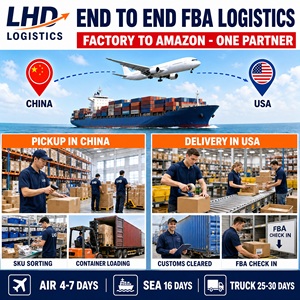
| Line-Haul & Last-Mile Express | B2C Cross-border e-commerce, Amazon FBA replenishment | 4 – 7 Days | Customized packaging sorting, localized line-haul distribution in EU/UK/USA/AU, automated tracking API integration. |
| Multimodal Air-Sea / Project Cargo | Heavy industrial components, steel warehouse structures, bulk retail goods | 15 – 30 Days | Custom chartering, 20GP/40GP/40HQ container allocation, port-to-site rigging, heavy-lift handling (e.g. Puerto Caldera CR routes). |
| Global Reverse Air Logistics | RMA returns, luxury goods re-export, warranty exchange programs | 3 – 6 Days | Automated return label generation, duty drawdown assistance, centralized return sorting warehouse processing. |
Future Procurement Trends in OEM/ODM Air Cargo (2025–2030)
As enterprise procurement shifts toward risk mitigation, regionalized sourcing, and environmental accountability, international air cargo is undergoing a structural evolution. Buyers who proactively adapt their freight procurement strategies will gain significant cost and resilience advantages over competitors relying on legacy booking channels.
1. The Shift toward Dedicated Block Space Agreements (BSAs) and OEM Capacity Control
Volatile consumer demand and unpredictable passenger belly capacity have highlighted the vulnerability of spot-market air cargo bookings. Forward-thinking procurement teams are establishing long-term OEM/ODM contracts with forwarders who maintain direct carrier Block Space Agreements (BSAs). This guarantees committed allocation on key trade lanes (such as China to US West Coast, China to Netherlands, and US to LATAM) even during peak Q4 shipping surges, insulating shippers from extreme spot-rate spikes.
2. Integration of Sustainable Aviation Fuel (SAF) and Decarbonization SLAs
Environmental, Social, and Governance (ESG) mandates are transforming logistics procurement from a pure cost calculation to a carbon-accounting discipline. European Union regulations, such as the ReFuelEU Aviation initiative, mandate increased SAF blending ratios. Future OEM/ODM forwarders must provide transparent Scope 3 carbon emissions reporting, verifiable SAF offset certificates, and optimized flight path selections to satisfy corporate sustainability audits.
3. Hyper-Localized Micro-Fulfillment & Customized Line-Haul Networks
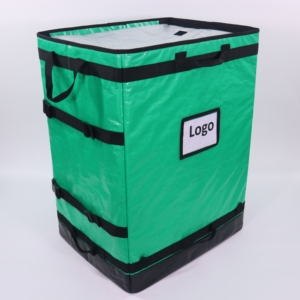
Cross-border e-commerce brands no longer rely on single centralized distribution hubs. The procurement trend favors custom line-haul solutions that fly freight directly into regional gateway airports (e.g., Amsterdam Schiphol, Frankfurt, Miami International) where parcel sorting occurs immediately upon deconsolidation. By utilizing customized tote bags, pre-sorted unit load devices (ULDs), and direct last-mile injection into postal networks (USPS, DHL, DPD), delivery times drop from weeks to days while eliminating intermediary warehousing fees.
4. Closed-Loop Reverse Logistics Infrastructure
With global e-commerce return rates hovering between 15% and 30%, reverse logistics has evolved from a customer service headache into a core procurement metric. OEM/ODM forwarders are now tasked with engineering global return express networks. By leveraging consolidated return air shipments, duty drawdown mechanisms (reclaiming paid import duties on returned goods), and regional reconditioning centers, brands preserve profit margins and maintain brand equity.
Technological Innovations Shaping Smart Air Logistics
The convergence of advanced hardware, automated warehouse sorting, and predictive algorithms is reshaping how freight forwarders handle OEM/ODM air cargo operations. Key technological pillars driving efficiency include:
IoT-Powered Real-Time Telematics
Modern air cargo tracking extends far beyond static airport status scans. Sensor devices embedded within ULDs transmit real-time telemetry via cellular and satellite networks when on the ground, monitoring ambient temperature, relative humidity, light exposure (tamper detection), and multi-axis shock impact for sensitive cargo.
Automated Sorting Warehouses
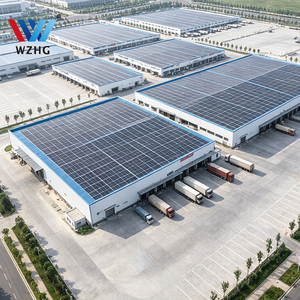
Purpose-built steel-structure parcel sorting facilities utilize automated conveyor systems, high-speed optical barcode scanners, and dynamic weighing dimensioners (DWS). This infrastructure allows forwarders to process tens of thousands of individual parcels per hour, custom-sorting them by postal zone code prior to air uplift.
Predictive Customs Compliance APIs
By integrating direct EDI and API links with customs authorities (such as U.S. CBP Automated Commercial Environment and European IOSS portals), manifest data is audited and pre-cleared while cargo is still in flight. Potential HS code mismatches, valuation anomalies, or duty exemption opportunities are flagged and resolved automatically.
Frequently Asked Questions by Enterprise Freight Buyers
Navigating international air freight procurement requires absolute clarity regarding operational parameters, pricing formulas, and regulatory compliance. Below are detailed technical answers to key questions asked by enterprise buyers.
How is Chargeable Weight calculated in OEM/ODM Air Cargo shipping?
In international air cargo standard practice defined by IATA, freight charges are billed on the Chargeable Weight, which is the greater value between the Gross Weight (actual scale weight) and the Volumetric Weight (Dimensional Weight). The standard volumetric ratio for air freight is 1:6000 (or 167 kg per cubic meter). The formula is: Volumetric Weight (kg) = [Length (cm) × Width (cm) × Height (cm)] ÷ 6000. For courier/express services, a ratio of 1:5000 is frequently applied. As an ODM forwarder, we optimize cargo loading through custom consolidation and compression packaging to minimize volumetric penalties.
What specific advantages does direct executive engagement (founders) offer over large multinational forwarders?
Large multinational freight forwarders frequently route mid-market and enterprise accounts through tiered call centers, ticketing queues, and automated chatbots, leading to communication lag during critical transit delays. At our organization, co-founders Marcus Vinicius Soares and Marco Junior personally oversee operations. Decisions regarding carrier re-routing, customs documentation overrides, or emergency charter space allocations are made in minutes, backed by over 20 years of combined hands-on logistics leadership.
How do you ensure customs compliance and duty optimization for imports into Germany, France, and the EU?
Customs compliance in the European Union requires meticulous handling of VAT registration, Import One-Stop Shop (IOSS) compliance, and accurate Harmonized System (HS) code classification. Our private logistics management service optimizes import duties by leveraging legally recognized preferential trade agreements, customs warehousing (postponing duty payment until market release), and dynamic VAT tax refund processing, avoiding overpayment while ensuring 100% regulatory compliance.
What documentation is required to initiate a customized air freight line-haul program?
To establish a tailored OEM/ODM line-haul program, buyers should supply: (1) Commercial Invoice and Packing List specifying HS codes, piece count, gross weight, and precise box dimensions; (2) Shipper's Letter of Instruction (SLI); (3) Destination last-mile requirements (e.g., Amazon FBA warehouse specs or direct-to-consumer delivery matrices); and (4) Any mandatory safety certificates, such as MSDS or UN38.3 test reports for products containing lithium batteries.
What is the transit time difference between direct air charter, priority air cargo, and air-sea multimodal services?
Direct Air Charters provide dedicated aircraft capacity with door-to-door transit within 24 to 48 hours. Priority Air Cargo utilizes scheduled commercial freighter flights, delivering door-to-door within 2 to 4 days. Air-Sea Multimodal solutions (e.g., sea freight from Asia to a transshipment hub like Miami or Dubai, followed by air freight to destination) offer a balanced compromise, achieving 10 to 14 days transit at 40% to 60% lower cost than pure air freight.
Can your team handle specialized oversize project cargo and steel distribution warehouse operations?
Yes. Beyond standard parcel and palletized air freight, our network specializes in heavy-lift project cargo, containerized ocean shipping (20GP, 40GP, 40HQ), and logistics facility engineering. We manage origin-to-destination transport for specialized industrial infrastructure—such as heavy steel warehouse sorting frameworks—from manufacturing plants in Asia to complex project sites globally, including specialized routes like Puerto Caldera, Costa Rica.
Enterprise Procurement & Onboarding SOP Checklist
Follow this 5-step operational framework to audit and onboard an OEM/ODM Air Freight Forwarding supplier effectively:
Cargo Data Mapping
Compile exact SKU dimensions, volumetric ratios, hazardous material declarations (UN numbers), and target delivery SLAs to establish baseline shipping profiles.
Route & BSA Selection
Evaluate direct vs consolidated flight options. Lock in Block Space Agreements (BSAs) or predictable rate cards to safeguard peak-season budget allocations.
Customs Pre-Audit
Pre-clear HS tariff codes, duty exemption qualifications, and VAT compliance pathways with our customs specialists before cargo leaves the supplier's dock.
OEM Line-Haul Integration
Set up white-label tracking APIs, customized tote sorting parameters, and label formatting for automated last-mile injection in destination markets.
Active Telemetry & Review
Monitor real-time milestones via sensor-backed telemetry. Conduct monthly SLA performance audits directly with executive founders to continuously refine efficiency.
Ready to Optimize?
Connect directly with Marcus Vinicius Soares or Marco Junior to review your custom air logistics requirements today.