Enterprise Procurement Portfolio
Featured Industrial Infrastructure & Global Logistics Solutions
Integrate custom engineering, structural fabrication, cold-chain routing, and DDP customs compliance across major international trade corridors.
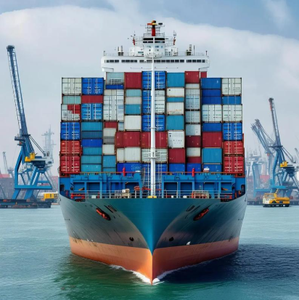
Small E Commerce Parcel Air Freight DDP Door to Door From China to UK Fast Cross Border Last Mile Delivery
Inquire Specification
Formal Customs Clearance DDP Air Freight China to US Compliance Shipment Legal Goods Entry Standard Service
Inquire Specification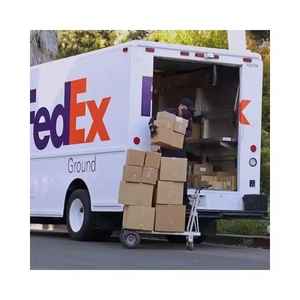
Temperature-Controlled Logistics - China to USA/UK/France Cold Chain Air/Sea Freight
Inquire Specification
Transitaire Chine France UK Shipping Agent DDP Europe Electric Bicycle Logistics Last-Mile Delivery Services Insurance 6-10 Days
Inquire Specification
China to USA Sea Freight for Reverse Logistics and Return Cargo With USA Origin
Inquire Specification
Customs Compliance Specialist - China to USA/UK/Italy Cargo Shipping & Documentation
Inquire Specification
Forwarder Shipping From China to Canada DDP Sea Freight LCL Container Shipping for Bulk Pallets Heavy Cargo to AU Warehouses
Inquire Specification
Technical Architecture & Industrial Standards
Custom OEM Rail Freight Engineering: Operational Framework
A deep dive into high-axle loading, bogie customization, intermodal clearance gauges, and cross-border rail transport optimization for Tier-1 OEM manufacturers.
Modern global industrial procurement demands an unprecedented degree of reliability, volumetric efficiency, and structural safety. As global manufacturers shift toward high-yield production models, relying solely on traditional maritime transport introduces volatile transit lead times, port congestion risks, and elevated carbon taxation (such as EU CBAM compliance). Custom Original Equipment Manufacturer (OEM) rail freight transport has emerged as the core strategic spine for international supply chain resilience, bridging heavy industrial production lines directly with intermodal distribution networks across North America, Europe, Central Asia, and Latin America.
Engineering a custom OEM rail freight system requires far more than standard container booking. It encompasses direct structural engineering of specialized rolling stock—including low-boy flatcars, well wagons, articulated container cars, and temperature-controlled reefer boxcars—tailored to specific cargo geometries, weight distributions, and mechanical stress dynamics. Whether moving out-of-gauge heavy industrial machinery, Q355B structural steel warehouse assemblies, lithium-ion battery banks, or finished automotive assemblies, OEM rail logistics optimizes payload-to-tare ratios while meeting rigorous international rail safety certifications (including UIC, AAR, GOST, and GB standards).
Custom Rolling Stock Fabrication
Engineering bespoke railcars with custom floor locking systems, specialized tie-down anchor arrays, and modular bogie designs rated for 22.5-ton to 30-ton heavy axle loads across variable track gauges.
Intermodal Clearance Analysis
Advanced 3D kinematic envelope modeling ensuring zero clearance violations across AAR Plate F, UIC 505-1, and GOST 9238-83 structure gauges during transit through tunnels and overhead bridges.
Active Telemetry & Environmental Control
IoT-enabled sensor arrays tracking shock, multi-axis vibration vectors, ambient humidity, and temperature stability in real-time with satellite backhaul for high-value sensitive industrial payloads.
Technical Comparison: Rail Freight vs. Ocean & Air Modes
Evaluating multimodal trade-offs is essential for supply chain directors balancing land-bridge speed, capital tie-up costs, and volumetric payload capabilities.
| Logistics Performance Metric | Custom OEM Rail Transport | Ocean Freight (FCL/LCL) | Priority Air Freight |
|---|---|---|---|
| Transit Speed (China to EU / Trans-Eurasia) | 12 – 18 Days | 35 – 48 Days | 3 – 7 Days |
| Payload Density & Axle Capacity | Up to 30 Tons / Axle | 26 Tons / 40' HQ Container | Restricted Unit Load Devices (ULD) |
| Weather & Sea State Vulnerability | Low (Shielded Land Corridors) | High (Typhoons, Port Delays) | Moderate (Flight Disruptions) |
| Carbon Emissions per Ton-KM | 18 – 28g CO2e | 15 – 40g CO2e | 500 – 700g CO2e |
| Customized Mechanical Anchoring | Direct Wagon Integration | Standard ISO Lashing Only | Air Cargo Netting & Pallets |
Strategic Procurement Horizon
Future Procurement Trends in OEM Rail Logistics (2025–2030)
Key market shifts transforming how industrial buyers acquire, customize, and operate rail transport assets worldwide.
1. Transition to Variable Gauge & Automatic Axle Changeovers
To overcome traditional break-of-gauge delays at international borders (e.g., between 1435mm standard gauge and 1520mm broad gauge), OEM railway wagon factories are increasingly equipping custom rolling stock with automatic gauge-change bogies. This engineering breakthrough reduces border dwell time from 14 hours down to less than 30 minutes per block train.
2. Lightweight Q355B & High-Strength Alloy Structural Wagons
Procurement mandates are moving away from heavy carbon steel structures toward micro-alloyed Q355B and Q460 steel formulations. By optimizing structural beam geometry without compromising yield strength, modern OEM rail suppliers achieve a 12% reduction in tare weight, allowing shippers to maximize revenue-generating cargo payloads per train configuration.
3. Seamless Integration of DDP Customs & Smart Port Terminals
Future-proof rail procurement extends beyond mechanical hardware to digital trade compliance. Enterprise buyers are prioritizing suppliers who offer end-to-end DDP (Delivered Duty Paid) legal customs clearing, bonded dock management, and automated EDI integration directly into terminal operating systems for rapid last-mile rail-to-truck transfers.
Unmatched Operational Authority
Why Enterprise Leaders Partner With Our Logistics Network
Built on decades of hands-on rail, ocean, air, and customs management across North America, Latin America, Europe, and Asia.
Marcus Vinicius Soares
Co-Founder & Managing Director
Having led massive-scale freight operations in Brazil and the Americas for over a decade, Marcus personally oversees complex multimodal supply chains, managing teams, customs compliance, and client strategic accounts with zero room for error.
Marco Junior
Co-Founder & Rail Operations Specialist
An international freight authority with hands-on experience directing cross-border rail transport, heavy equipment movement, and intermodal route engineering. Marco ensures every contract benefits from direct founder accountability.
Languages Spoken fluently: English, Portuguese, Spanish — Eliminating cross-border friction.
Hub Location: Doral, Miami FL (US-LATAM-Global Gateway)
Technical Knowledge Base
Frequently Asked Questions by Industrial Procurement Managers
Detailed technical answers addressing OEM customization, customs clearance, heavy load engineering, and intermodal routing.
What custom modifications can an OEM Rail Freight Factory provide for specialized cargo?
OEM rail wagon factories engineer bespoke structural modifications including custom tie-down winch layouts, reinforced Q355B floor plates for point-load distribution, removable side-wall stanchions for oversized timber or steel billets, integrated climate-control generator mounts for reefer units, and specialized shock-absorbing draft gear to mitigate longitudinal coupling impacts during classification yard operations.
How are international railway gauge differences handled during cross-border transit?
Cross-border rail operations resolve gauge discrepancies (such as transferring between 1435mm standard gauge in China/Western Europe and 1520mm broad gauge in CIS states) through three primary methods: automated gauge-change bogies, gantry-crane intermodal container transshipment at bonded border hubs, or mechanical wheelset exchange in specialized pit facilities. Our team plans the optimal transit model based on cargo sensitivity and lead time demands.
What is DDP (Delivered Duty Paid) in the context of international rail freight?
DDP rail freight is a turnkey service where the forwarder assumes complete operational and legal responsibility for transport, export customs, border transit clearances, import tariffs, VAT, and final mile delivery directly to the customer’s manufacturing plant or warehouse dock. This eliminates unexpected demurrage fees, customs impounds, and regulatory friction for the importer.
How does heavy axle load engineering affect overall transport efficiency?
Upgrading rolling stock axle loads from standard 22.5-ton limits to 25-ton or 30-ton heavy-haul standards allows industrial shippers to transport significantly higher density cargo per train. This reduces total trainset length, optimizes locomotive power utilization, and lowers net transport cost per ton-kilometer by up to 18% on high-volume industrial corridors.
Can temperature-sensitive goods be safely transported via long-distance intermodal rail?
Yes. OEM temperature-controlled reefer railcars and specialized 45ft diesel-electric reefer containers feature autonomous power generation systems, redundant cooling compressors, satellite telemetry monitoring, and fuel reservoirs capable of continuous autonomous operation for over 20 days, maintaining precise temperatures between -25°C and +25°C even in harsh winter environments.
What documentation is required for out-of-gauge (OOG) rail equipment shipping?
Out-of-gauge shipping requires certified 3D CAD loading diagrams, center-of-gravity calculations, lashing/securing plans verified by a licensed railway engineer, detailed route clearance permits from affected rail infrastructure owners, and official customs commodity classification (HS codes). Our engineering team prepares all necessary technical dossiers prior to cargo dispatch.
Direct Engineering Consultation
Request a Custom OEM Rail Logistics Blueprint
Connect directly with our co-founders to review your cargo dimensions, route feasibility, rolling stock manufacturing specs, and custom DDP delivery programs.