Curated Solutions & Heavy Machinery
Featured Export Logistics & Duty Optimization Portfolios
Explore our top-rated equipment, cross-border freight infrastructure, and custom tax drawback execution programs tailored for global distribution networks.

Executive Whitepaper: Strategic Duty Drawback & Export Tax Refund Architecture in China
In global trade engineering, cross-border procurement extends far beyond freight rates and FOB vessel quotes. For international enterprises importing manufactured goods, heavy industrial equipment, or high-volume e-commerce inventory from China, China Export Tax Rebates (出口退税) and Duty Drawback Mechanisms represent the single most impactful financial lever for bottom-line margin expansion. When structured correctly, China's State Taxation Administration (STA) refund framework restores up to 13% of domestic Value Added Tax (VAT) paid during manufacturing, transforming gross operational expenditure into working capital resilience.
However, navigating the intersection of Chinese tax compliance, customs declaration codes (such as General Trade 0110 vs. Cross-Border E-Commerce 9710/9810), foreign exchange settlement protocols under the State Administration of Foreign Exchange (SAFE), and international Incoterms (DDP, DDU, FOB) requires deep structural expertise. Partnering with elite China Duty Drawback Services Suppliers and Licensed Export Freight Forwarders bridges the operational divide between Chinese manufacturing hubs and destination import compliance across North America, Europe, Latin America, and emerging markets.
Core Insight: The "Information Gain" Advantage in Export Duty Optimization
Standard freight forwarders view customs clearance as a routine filing step. Advanced supply chain architects treat customs filings as a synchronized financial instrument. By aligning verified HS codes, accurate invoice reconciliation, and compliant foreign exchange remittance, buyers eliminate double taxation while legally capturing maximum China export VAT rebates.
1. The Regulatory Mechanics of China's Export Tax Rebate System
China operates a destination-based VAT policy designed to boost export competitiveness by relieving exported goods of domestic tax burdens. Governed by the STA and General Administration of Customs of China (GACC), the primary tax rebate mechanisms are categorized into two primary frameworks:
- "Exemption, Credit, and Refund" Method (免、抵、退税): Applied primarily to manufacturing enterprises exporting self-produced goods. VAT payable on domestic raw materials is credited against domestic sales VAT, with the remaining uncredited balance fully refunded upon export validation.
- "Exemption and Refund" Method (免退税): Leveraged by non-manufacturing export trading companies and licensed supply chain brokers. Goods purchased for direct export are entirely exempt from export-stage VAT, and the exact input VAT listed on official Special VAT Invoices (增值税专用发票) is refunded to the export entity upon verified remittance of foreign currency.
Achieving a 100% successful claim rate demands rigorous alignment across four vital export artifacts: the GACC Export Customs Declaration Form, the Special Domestic VAT Invoice, the Bill of Lading (Ocean/Air/TIR Road Freight), and the SAFE Foreign Exchange Settlement Document. A mismatch in item descriptions, unit quantities, or HS Code classifications between these four documents results in immediate audit holds or complete forfeiture of rebate entitlements.
Enterprise Value Drivers
Why Global Buyers Require Specialized Supply Chain Partners
Combining physical heavy equipment moving capabilities with sophisticated international tax engineering.
Full Fiscal Compliance
End-to-end verification of Chinese Special VAT Invoices, ensuring zero tax audit exposure and complete compliance with STA regulations for 100% legal drawback recovery.
Heavy Cargo Infrastructure
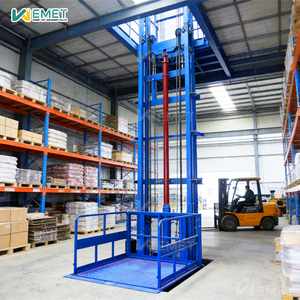
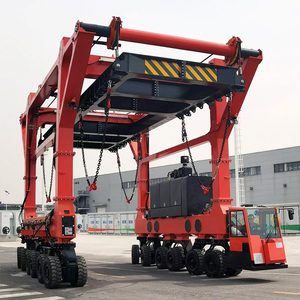
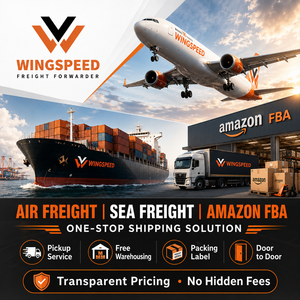
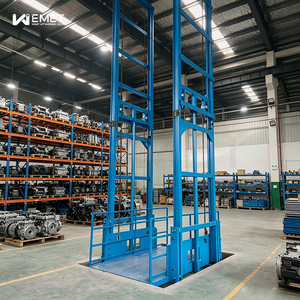
From 1-ton vertical hydraulic lifts to port-side container straddle carriers, we combine heavy equipment export logistics with tailored customs documentation management.
Multilingual Founder Oversight
Founded by logistics veterans Marcus Vinícius and Marco Junior, offering direct operational execution in English, Portuguese, and Spanish across US, LATAM, EU, and China trade lanes.
Future Procurement & Duty Optimization Trends (2025–2030)
As international supply chains evolve amidst geopolitical shifts, regulatory tightening, and digital transformation, enterprise buyers cannot rely on legacy freight forwarding models. Below are the definitive structural trends shaping China export procurement and duty optimization over the next decade:
1. Transition to Cross-Border E-Commerce (CBEC) Bonded Drawback Models (9710 & 9810)
Traditionally, tax refunds required standard B2B General Trade declarations (Customs Code 0110). However, the rapid expansion of direct-to-consumer and dropshipping models (Shopify, TikTok Shop, Amazon FBA) has pushed GACC to expand Customs Supervision Codes 9710 (B2B Direct Export) and 9810 (Export to Overseas Warehouse). Under these modern codes, sellers can declare exports in bulk, place inventory into bonded logistics parks (BLPs), and secure tax drawbacks prior to final consumer sales—dramatically accelerating cash flow velocity.
2. Digitalization via GACC Single Window 3.0 & AI Customs Auditing
China's International Trade Single Window (中国国际贸易单一窗口) is fully integrating artificial intelligence to cross-reference HS code valuation, origin declarations, and domestic invoicing data in real time. Discrepancies between invoice descriptions and physical cargo specifications are flagged automatically before loading. Suppliers and buyers who utilize standardized, pre-audited digital documentation protocols achieve instant export clearance and expedited refund turnarounds within 3–5 business days.
3. Harmonization with Global Import Duty Relief (EU CBAM, US Section 301 Mitigation)
With destination markets enforcing stricter trade barriers—such as the EU Carbon Border Adjustment Mechanism (CBAM) and US Section 301 tariffs—the strategic focus has shifted toward Total Tariff Minimization. Exporters are increasingly utilizing Bonded Warehouse Assembly and Processing Trade frameworks. Raw materials or components imported into Chinese Free Trade Zones (FTZs) can be processed, re-exported, and granted full duty exemption (进料加工免税) without paying domestic VAT, neutralizing dual-border duty accumulation.
4. Expansion of Multimodal TIR Road Freight Networks across Eurasia
For high-value industrial equipment, electronics, and priority freight destined for Central Europe (e.g., Slovakia, Germany, France) and the UK, door-to-door TIR (Transport Internationaux Routiers) road express services have emerged as a disruptive alternative to sea and air freight. Offering 12-to-15-day transit times with single-seal customs transit, TIR freight bypasses intermediate port delays while maintaining complete eligibility for Chinese export duty drawbacks upon border departure.
Strategic Decision Matrix
Comparative Analysis of Export Logistics & Fiscal Modes
Evaluating freight efficiency, transit speed, and duty drawback viability across core export channels.
| Shipping / Logistics Mode | Primary Suitable Cargo Types | Average Transit Window | China Duty Drawback Status | Fiscal & Operational Benefit |
|---|---|---|---|---|
| General Trade Ocean FCL (0110) | Heavy industrial lift equipment, straddle carriers, bulk goods | 22 – 35 Days | Full Rebate (up to 13%) | Lowest freight cost per unit; ideal for large enterprise inventory replenishment. |
| Cross-Border TIR Road Express | Precision machinery, high-value electronics, urgent B2B cargo | 12 – 16 Days | Full Rebate upon Border Seal | Bypasses ocean port congestion; seamless door-to-door DDP transit to UK/EU. |
| CBEC 9710 / 9810 Direct Export | E-commerce inventory, Shopify/TikTok dropshipping, warehouse stock | 5 – 10 Days (Air/Express) | Streamlined Batch Refund | Allows pre-refund of VAT prior to final destination sale via bonded warehouses. |
| Bonded Processing Trade (1215) | Re-manufactured goods, imported component assemblies | Custom Operational Timelines | Zero-Rated Duty Exemption | Eliminates import tariff on raw inputs while granting export VAT exemption. |
Step-by-Step Blueprint for Executing Risk-Free China Duty Drawbacks
To guarantee that global buyers and Chinese manufacturing partners successfully capture full tax refunds without encountering customs delays, our senior freight engineers execute a rigid 5-stage audit framework:
- Pre-Procurement HS Code & Tax Rate Auditing: Before purchase contracts are finalized, the product’s 10-digit Chinese HS Code is audited against the official GACC Tax Rebate Schedule. We confirm the exact applicable refund rate (ranging from 0% to 13%) and ensure the manufacturer possesses the qualified legal status to issue official Special VAT Invoices.
- Customs Declaration Alignment (GACC Form Preparation): During cargo pickup and export booking, our customs specialists verify that the exporter name, commodity descriptions, unit measures, and total invoice amounts on the declaration form strictly match the domestic VAT invoices.
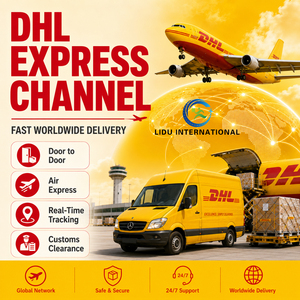
- Multimodal Logistics Execution & BL Tracking: Whether transporting 1-ton vertical hydraulic lifts via sea freight or sending e-commerce shipments via priority air freight, an official, clean Bill of Lading (or TIR Consignment Note) is generated, serving as legal proof of export leaving Chinese territory.
- SAFE Foreign Exchange Settlement & Reconciliation: The buyer remits payment in compliant foreign currency (USD, EUR, GBP, CNH) directly into the Chinese exporter’s authorized bank account, satisfying the State Administration of Foreign Exchange cross-border settlement requirements.
- Electronic Tax Refund Filing & Disbursal: The finalized claim packet is submitted electronically to the local State Taxation Administration bureau. Upon automated verification, refund capital is disbursed directly back to the enterprise, lowering net purchasing costs.
Frequently Asked Questions
Expert Clarifications on Duty Drawbacks & Freight Execution
Direct answers to the most crucial regulatory and operational queries raised by global importers.
What is the difference between China export VAT rebate and import duty drawback?
An export VAT rebate (出口退税) is granted by Chinese tax authorities to return domestic input VAT (up to 13%) collected during manufacturing once goods leave China. Conversely, import duty drawback refers to destination country customs programs (e.g., US CBP or EU Customs) that refund duties paid on imported materials that are subsequently re-exported. Both mechanisms reduce net supply chain expenditure when coordinated by an integrated freight partner.
Can a foreign buyer directly claim tax refunds from the Chinese State Taxation Administration?
No. Foreign entities without a legally registered Chinese corporate tax ID cannot directly file claims with the STA. Foreign buyers must work through a accredited Chinese export trading enterprise or licensed logistics agent. The agent acts as the exporter of record (EOR), processes the domestic Special VAT Invoices, collects the refund, and passes the financial savings back to the overseas buyer via discounted unit pricing or contract rebates.
How do DDP (Delivered Duty Paid) Incoterms affect export tax refund eligibility?
Under DDP terms, the seller or their freight forwarder assumes full responsibility for export clearance in China as well as import clearance and duty payment in the destination country. To maintain export tax rebate eligibility in China, the export declaration must properly record the seller or accredited agent as the Chinese exporter, while ensuring international freight and insurance components are accurately deducted from the declared FOB valuation used for tax calculation.
What documents trigger tax audit red flags during China customs clearance?
Tax audits are triggered primarily by discrepancies between the Special VAT Invoice and the Export Declaration Form. Common issues include incorrect 10-digit HS codes, misdeclared cargo weights or unit counts, unit prices significantly exceeding industry averages, payment received from third-party offshore accounts unconnected to the buyer of record, or missing bills of lading proving physical departure.
How does cross-border e-commerce 9710/9810 tax refunding work for dropshippers?
Under GACC Supervision Codes 9710 (B2B Direct Export) and 9810 (Overseas Warehouse Export), e-commerce merchants can consolidate small orders into bulk export declarations. By placing inventory into Chinese bonded warehouses prior to international shipment, sellers generate simplified tax drawback filings, receiving input VAT refunds without waiting for individual consumer parcels to clear destination customs.
Engineered Supply Chain Growth
Optimize Your China Export Duty Recovery Today
Partner directly with industry founders Marcus Vinícius and Marco Junior. Whether procuring heavy industrial cargo lifts or managing high-volume cross-border fulfillment, our team ensures 100% tax compliance, maximum drawback retention, and seamless international transport.
Inquire Now