Enterprise Procurement Selection
CE Certified Machinery & Specialized Logistics Solutions
Explore our vetted industrial equipment portfolio and end-to-end customs clearance forwarding frameworks tailored for international buyers and global manufacturing plants.
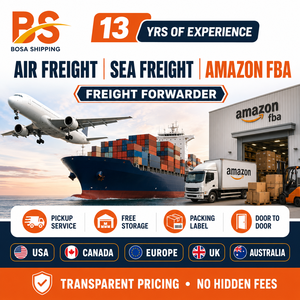
Forwarder Shipping From China To Australia DDP Sea Freight LCL Container Shipping For Bulk Pallets Heavy Cargo To AU Warehouses
Contact Us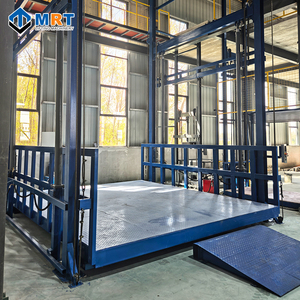
Industrial Cargo Lift Platform Heavy Duty Material Lift Cargo Elevator Goods Lift
Contact Us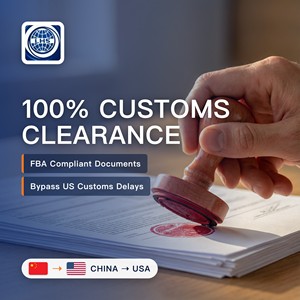
China to USA Shipping Agent with DDP Customs Clearance Warehouse Fulfillment and Last Mile Delivery Service
Contact Us
FriendShip High Quality Ali Baba Shipping Agents To Saudi Arabia Service
Contact Us
Road Freight Forwarding FedEx Transportation From China to the World/US Cheapest Door-to-Door Express air Freight Express
Contact Us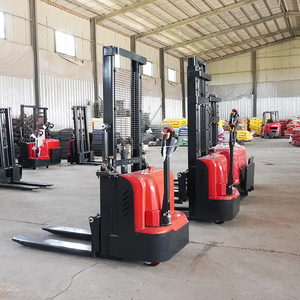
Triplex Mast Full Electric Pallet Stacker Heavy Duty Warehouse Forklift Truck High Lift Cargo Loader Logistics Equipment
Contact Us
Germany France Buyer Private Logistics Agent Customs Duty Optimization VAT Compliance Tax Refund Services 24/7 Support Insurance
Contact Us
Institutional Capability & Heritage
Why Institutional Buyers Trust Our Customs Clearance Infrastructure
Combining over two decades of combined operational leadership in international freight, cross-border customs compliance, and specialized industrial equipment handling.
Founder-Led Accountability
Every complex import program and high-value equipment shipment is directly overseen by experienced logistics founders (Marcus Vinicius & Marco Junior). No call centers, no fragmented communication—just direct executive control.
Complete CE Conformity Assurance
We mitigate border seizure risks by meticulously reviewing technical files (TCF), Declaration of Conformity (DoC), test reports (EMC, LVD, Machinery Directive), and physical marking protocols prior to vessel departure.
Multi-Hub Strategic Corridors
Operating dedicated hubs in Miami (Doral gateway to LATAM), European entry ports (Rotterdam, Hamburg, Le Havre), and Asian manufacturing clusters to ensure seamless multi-modal DDP/DAP freight execution.
End-to-End Last Mile & Heavy Duty Lifting
From factory floor dispatches using triplex mast electric stackers to specialized low-boy heavy transport for cargo lifts, we orchestrate the entire physical supply chain without intermediate vendor handoffs.
VAT Optimization & Duty Deferral
Structured fiscal representation in the EU (Germany, France) and bond-bonded warehousing in the US allows importers to optimize duty drawdowns, defer VAT cash flows, and maximize tax refund efficiencies legally.
Trilingual Cross-Border Execution
Fluent execution in English, Spanish, and Portuguese eliminates cultural and bureaucratic friction between overseas suppliers, international port authorities, customs brokers, and final consignees.
Industry Whitepaper & Technical Standards
Demystifying CE Compliance in International Machinery Clearance & Export Logistics
A rigorous examination of regulatory directives, technical documentation requirements, customs audit parameters, and tariff mitigation strategies for global B2B procurement.
1. The Regulatory Imperative of CE Certification in Import Customs Clearance
In international trade, the CE (Conformité Européenne) mark is not merely a marketing badge; it is a legally binding declaration that an imported product conforms to all essential health, safety, and environmental protection standards established under European Union harmonized legislation. When importing industrial goods—such as industrial cargo lift platforms, full electric pallet stackers, and heavy-duty material handling machinery—customs authorities across the EU, US CBP (under mutual recognition frameworks), and Gulf Cooperation Council (GCC) entities enforce stringent import validation procedures.
Importers often encounter catastrophic delays or outright cargo destruction when arriving at port due to non-compliant documentation. To ensure seamless customs release, factories and exporters must guarantee alignment across three primary legislative directives:
- Machinery Directive 2006/42/EC: Governs mechanical stability, moving parts protection, emergency stop mechanisms, and load-bearing structural integrity for cargo elevators and forklifts.
- Low Voltage Directive (LVD) 2014/35/EU: Applies to all electric pallet stackers, charging units, and industrial lifts operating with voltage ratings between 50 and 1000V AC or 75 and 1500V DC.
- Electromagnetic Compatibility (EMC) Directive 2014/30/EU: Ensures electronic control boards and motor drives do not emit electromagnetic interference that disrupts surrounding port or factory infrastructure.
2. Anatomy of a Zero-Defect Technical Construction File (TCF) for Customs
Customs officers at key hubs such as Rotterdam, Hamburg, Los Angeles, and Jeddah perform routine risk-based inspections targeting high-risk industrial shipments. An import clearance failure usually stems from an incomplete Technical Construction File (TCF). An authoritative TCF provided by an audited manufacturing exporter must contain the following verified components:
EC Declaration of Conformity
Signed document identifying the legal manufacturer, authorized representative, applied harmonized standards (e.g., EN ISO 12100), and Notified Body serial numbers.
Risk Assessment Report
Comprehensive evaluation detailing identified mechanical/electrical hazards and the engineering measures implemented to mitigate operational failure.
Accredited Test Reports
Full laboratory test data issued by ISO 17025 accredited bodies proving compliance with structural fatigue, electrical insulation, and noise emission limits.
Bilingual Manuals & Markings
Original operating instruction manuals translated into the destination country's official language, accompanied by legible, tamper-proof rating plates.
3. Tariff Duty Optimization & HS Code Mapping for Machinery Logistics
Achieving optimal financial efficiency during import customs clearance requires precise Harmonized System (HS) code classification. Misclassification leads to punitive customs penalties, retroactively assessed duties, or customs hold orders. Below is a strategic classification matrix utilized by experienced freight agents to streamline entry declarations and utilize free trade agreements (FTAs).
| Equipment Category | Harmonized System (HS Code) | Standard Duty Range (EU/US) | Key Customs Clearance Requirement | Optimization Strategy |
|---|---|---|---|---|
| Electric Pallet Stackers | 8427.10.00 | 0.0% – 4.5% | CE Mark, LVD/EMC Test Reports, Battery Safety Data Sheet (MSDS) | Classify battery pack integrated within lifting chassis to avoid separate component duties. |
| Industrial Cargo Lifts | 8428.10.00 | 0.0% – 2.7% | Machinery Directive Compliance, Structural Load Certificates | Utilize pre-shipment assembly inspection certificates to clear customs as unified mechanical unit. |
| Air Freight Cargo Consolidations | 9801.00.10 / Various | Varies by Commodity | Master Air Waybill (MAWB), Pre-alert Manifest, Dangerous Goods (DG) Clearance | Consolidate under Miami / Doral bonded hub to defer duties until final market destination dispatch. |
| Sea Freight Heavy LCL/FCL | 8709.11.00 / 8427.20 | 2.0% – 5.0% | FUMIGATION (ISPM 15) for wood packing, Bill of Lading (B/L) description match | Leverage DDP (Delivered Duty Paid) terms with private logistics agent for integrated tax refund filing. |
Strategic Horizon
Future Procurement Trends in Global Manufacturing & Customs Logistics
How digital trade compliance, carbon footprint mandates, and nearshoring hub architectures are redefining cross-border sourcing strategies for enterprise buyers.
1. AI-Driven Automated Customs Clearing
Global customs authorities (such as US CBP's ACE system and EU's UCC Single Window) are deploying AI algorithms to cross-reference declared commercial invoice values, HS codes, and CE technical filings in real time. Exporters who provide structured digital data packets experience zero-delay green-channel clearance.
2. CBAM & ESG Environmental Audits
The European Union's Carbon Border Adjustment Mechanism (CBAM) and rising global ESG mandates require importers of heavy machinery and steel components to declare embedded carbon emissions. Factory suppliers offering low-carbon manufacturing certified by CE body audits will command a competitive edge.
3. Dominance of Turnkey DDP Solutions
Enterprise buyers are increasingly abandoning traditional FOB/CIF terms in favor of end-to-end DDP (Delivered Duty Paid). Under DDP, the logistics provider assumes full financial and operational responsibility for ocean/air transit, export filings, import customs clearance, VAT settlement, and final mile dock delivery.
4. Hub Nearshoring & Miami Gateway Expansion
To reduce supply chain vulnerability, international buyers are establishing buffer inventory at strategic transshipment nodes. Miami (Doral) has emerged as the premier logistics hub for Latin American and Caribbean trade routes, offering rapid air consolidation and bonded ocean warehousing.
5. Full Electrification of Material Handling
Global warehouses are phasing out internal combustion forklifts in favor of triplex mast full-electric stackers powered by advanced Lithium-iron-phosphate (LiFePO4) batteries, driving tighter regulatory customs scrutiny over UN38.3 battery transport safety certification.
6. Paperless Blockchain Logistics Documentation
The international adoption of Electronic Bills of Lading (eBL) under MLETR (Model Law on Electronic Transferable Records) is shrinking document processing times from days to seconds, preventing costly port demurrage and storage penalties.
Expert Knowledge Base
Frequently Asked Questions: Customs Clearance & Machinery Importation
Comprehensive answers compiled by our senior logistics directors to address critical operational, regulatory, and customs tax inquiries.
1. What occurs if imported industrial machinery arrives at customs without valid CE documentation?
If imported machinery (such as electric pallet stackers or cargo lifts) arrives at EU or enforcing customs points without authentic CE marking or an incomplete Declaration of Conformity, customs officials will issue a formal hold order. The importer faces three outcomes: (a) Mandatory re-export at the importer's expense, (b) Seizure and destruction of the cargo by customs authorities, or (c) In rare cases, delayed entry permission into a bonded warehouse for corrective testing and labeling under an authorized Notified Body supervision. Partnering with a specialized forwarder ensures all technical construction files are validated prior to vessel loading.
2. How do DDP (Delivered Duty Paid) shipping services simplify customs clearance for heavy equipment buyers?
Under DDP terms, the seller/logistics provider assumes 100% responsibility for managing the export clearance, international ocean/air freight transit, import customs entry filings, payment of import tariffs, destination VAT compliance, and final inland transport to the buyer's designated facility. This eliminates administrative burdens for the buyer, protects them from unexpected port demurrage fees, and guarantees predictable landed cost structures.
3. How can European buyers optimize import duty and maximize VAT refunds when sourcing from overseas factories?
Buyers importing into countries like Germany or France can utilize Fiscal Representation (under Article 23 VAT deferral schemes). This mechanism allows import VAT to be declared and offset simultaneously on monthly tax returns rather than requiring upfront cash payments at the port of entry. Furthermore, precise tariff classification under free trade provisions and proper customs valuation audits ensure buyers do not overpay on customs duties.
4. What specific documentation is required before shipping heavy warehouse machinery via ocean LCL or FCL?
Before booking container freight, the supplier must issue: (1) Commercial Invoice stating exact unit values and Incoterms, (2) Detailed Packing List specifying net/gross weights and dimensions, (3) Bill of Lading (B/L), (4) EC Declaration of Conformity (for CE regulated items), (5) ISPM 15 Fumigation Certificate for wooden packaging/crates, and (6) MSDS / UN38.3 Test Summary if the equipment contains lithium-ion batteries.
5. Why is Miami (Doral) considered a critical strategic hub for trade between North America, LATAM, and global markets?
Miami serves as the commercial epicenter for Americas trade. Its Foreign Trade Zones (FTZ), immediate access to PortMiami and Miami International Airport (MIA), and extensive network of specialized freight forwarders allow importers to consolidate cargo, defer customs duties, re-export to Latin America without paying US import tariffs, and access trilingual (English/Spanish/Portuguese) logistics expertise.
6. How long does standard import customs clearance take for machinery shipments?
With complete pre-filed documentation (such as US ISF 10+2 filed 24 hours prior to loading and electronic customs pre-entry), standard customs clearance typically completes within 24 to 48 hours of vessel discharge. However, if physical inspection, customs audit, or CE documentation verification is triggered, clearance can extend from 5 to 14 business days. Pre-clearance auditing by expert forwarders prevents these delay triggers.
7. What is the role of an Authorized Representative (EC Rep) in CE certified machinery exports?
If a manufacturing exporter is located outside the European Economic Area (EEA), EU regulations mandate that they appoint a European Authorized Representative (EC Rep) located within the EU. The EC Rep holds the Technical Construction File (TCF) on record for market surveillance authorities and serves as the official liaison for regulatory compliance inquiries during import clearance.
Optimize Your Global Supply Chain & Customs Execution Today
Connect directly with our founding directors to review your product technical compliance, optimize international freight routes, or request tailored DDP/DAP clearance pricing.
Contact Us