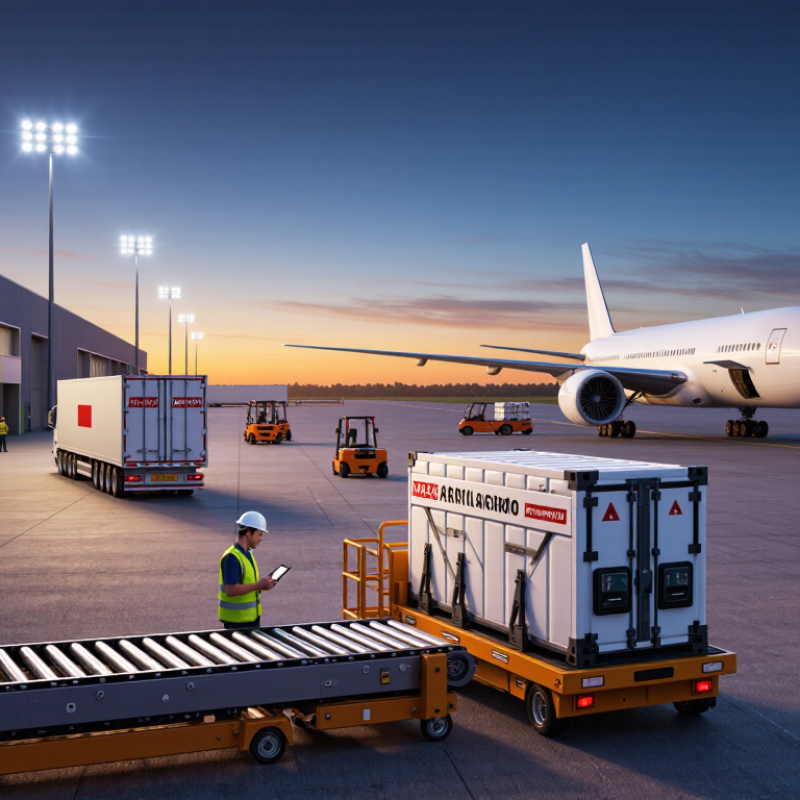
Priority air freight logistics is built for shipments that cannot wait for a standard service schedule. It uses air transport, coordinated ground handling, and time-sensitive planning to move cargo quickly. Think of a temperature-controlled carton leaving a warehouse at dusk, passing through a cargo terminal, and reaching a morning flight. Every handoff matters.
The process usually starts with shipment details, cargo dimensions, pickup timing, and delivery requirements. A logistics provider then checks flight availability, books capacity, arranges collection, and prepares the shipment for airport handling. After departure, tracking updates help teams respond to delays or missed connections. On arrival, customs processing and final delivery still take time. Fast flights do not erase every bottleneck.
IATA Global Head of Cargo Brendan Sullivan has emphasized collaboration and digitalization in air cargo. A fair paraphrase of that message is: “Visibility and coordination make speed useful.” That principle explains why priority service involves more than buying the earliest flight. It depends on accurate shipment information, responsive staff, and clear communication between carriers and handlers. Small details matter: a corrected label or late pickup can disrupt a tight connection.
There are limits. Premium routing may cost more, and capacity can change with little notice. Priority does not mean instant delivery. A realistic plan includes tracking, contingency options, and honest delivery estimates. Even experienced teams can misjudge a handoff. That deserves review, not glossing over. Understanding each step helps shippers choose a service that fits the cargo, deadline, and budget.
What Priority Air Freight Logistics Means and When It Is Used
Priority air freight is an expedited service for shipments where timing matters more than the lowest transport cost. It typically involves earlier booking, faster acceptance and handling, and a route selected to reduce transit time. The shipment may receive priority for available cargo space, but “priority” does not always mean a guaranteed arrival time. Weather, aircraft capacity, and missed cut-off times can still cause delays. Timing matters.
The service is commonly used for urgent replacement parts, time-sensitive product launches, or replenishment when a stockout is costly. A shipper should confirm the collection deadline, flight schedule, delivery commitment, and what happens if a connection is missed. Accurate paperwork and clear package labels help avoid preventable handling delays. In practice, the term can be fuzzy; service levels vary, so buyers should ask exactly what is included.
Industry data explains why capacity needs careful planning. IATA reported that global air cargo demand, measured in cargo tonne-kilometers, rose 11.3% in 2024, while available capacity grew 7.4% (IATA, 2024 air cargo market analysis). Boeing’s 2024 World Air Cargo Forecast projects air cargo traffic will grow an average of 4% annually over the next 20 years. These figures describe the wider market, not a promise that any individual shipment will move faster. A realistic priority plan includes a backup flight and a delivery buffer. Even then, some uncertainty remains.
How Does Priority Air Freight Logistics Work? - What Priority Air Freight Logistics Means and When It Is Used
| Priority Freight Situation | When It Is Used | How the Logistics Are Prioritized | Typical Transit-Time Planning | Important Considerations |
|---|---|---|---|---|
| Time-critical replacement parts | A production line, repair operation, or essential piece of equipment is waiting for a component. | The shipment is booked on an earlier suitable flight where space is available, with expedited handling and close tracking through airport handoffs. | Often planned in days rather than weeks; international airport-to-airport transit may take about 1–3 days, depending on the route and available flights. | Check cargo dimensions, packaging, flight capacity, destination handling, and whether delivery beyond the airport is included. |
| Urgent documents or compact shipments | Contracts, samples, or small, high-priority goods need rapid international movement. | Shipment acceptance, documentation checks, uplift, and status updates are coordinated to reduce avoidable waiting at origin and transit points. | Some established routes may support next-day or 1–2-day airport-to-airport movement, but timings vary by origin, destination, and schedule. | Customs clearance and local delivery can add time beyond the flight itself. Confirm the required delivery deadline and service scope. |
| Temperature-sensitive healthcare or laboratory cargo | Products or specimens have specific temperature limits, handling instructions, or a short usable life. | Routing and ground handling are selected to limit delays and maintain the required temperature conditions; monitoring and handling procedures are agreed in advance. | Transit is planned around the shipment’s validated temperature and time requirements, not solely the shortest scheduled flight. | Packaging, temperature range, permits, acceptance rules, and contingency arrangements must be confirmed before tendering the cargo. |
| Perishable or seasonal goods | Fresh food, flowers, or other goods may lose value if delayed or held too long. | Priority booking can reduce the time awaiting uplift, while coordinated airport handling helps move cargo through transfer points promptly. | Usually planned around the next suitable flight and the cargo’s remaining shelf life; actual transit depends on route capacity and handling conditions. | Flight schedules do not remove the need for suitable packaging, temperature controls, and any required inspection or clearance. |
| High-value or deadline-sensitive commercial cargo | A delivery date is commercially important, or extended transit would create significant operational or financial risk. | The shipper may choose a priority service level, request shipment visibility, and coordinate collection, export documentation, and delivery arrangements. | Often targeted for the earliest practical routing; the quoted estimate should specify whether it covers airport-to-airport or door-to-door movement. | Priority service improves handling or routing options but does not automatically guarantee a specific flight, customs release, or final delivery time. |
| Oversized, heavy, or unusual cargo | Machinery, industrial equipment, or other freight needs rapid movement but may not fit standard aircraft or handling limits. | Space, aircraft compatibility, loading equipment, and handling permissions are checked before booking; a suitable freighter or alternative routing may be required. | Transit planning depends on aircraft availability, cargo dimensions, route options, and any special loading arrangements. | Provide accurate dimensions and weight early. Capacity, acceptance, and schedule options can be more limited than for standard cargo. |
| Exceptional urgency requiring dedicated capacity | A shipment is too urgent, large, or operationally critical for available scheduled options. | A dedicated aircraft may be considered, subject to aircraft availability, operating permissions, airport constraints, and a feasible route. | May offer a more direct schedule, but planning and mobilization time vary; it is not automatically faster in every circumstance. | Charter capacity is a separate, higher-cost option and requires confirmation of aircraft suitability, permits, ground services, and total journey time. |
Transit times are general planning examples, not guarantees. Actual performance depends on route, flight schedules, capacity, cargo acceptance, customs clearance, weather, and the scope of service. “Airport-to-airport” timing does not include every origin or destination collection and delivery step.
FAQS
Provide pickup and delivery addresses, piece count, packed weight, and package dimensions. Include the deadline and any handling needs. Rough estimates help, but final measurements should match the packed cargo.
A large, light carton may take more aircraft space than its weight suggests. Charges can reflect dimensional weight. Measure the packed box, not an earlier draft.
Yes. Available space does not guarantee that cargo will meet the airport cutoff. Check the acceptance time before arranging pickup. Small timing gaps matter.
Use sturdy cartons, secure seals, and matching address labels. Make sure the invoice describes the goods accurately and agrees with the booking. Cushion delicate equipment well. Instructions alone are not enough.
No. Priority handling can improve routing options, but weather, capacity, and operating delays can still affect delivery. Build in realistic time buffers.
Useful scans include cargo acceptance, departure, arrival, and delivery. A missing scan can conceal a delay. Dashboards can also display stale information, so critical events deserve verification.
The provider should compare the next flight with the receiver’s actual delivery window. Ask for a revised estimate and the next planned action. “Delayed” alone is not enough.
Compare planned and actual milestones, record proof of delivery, and check how quickly exceptions were shared. Separate handling time from flight delays. One late scan can distort the picture.
In 2024, global air cargo demand rose 11.3%, while capacity increased 7.4%. That wider trend does not predict every route. Local handling still matters.
Conclusion
Priority air freight logistics is designed for shipments that need faster, more closely managed transportation than standard air cargo. It may be used when delivery deadlines are tight, goods are time-sensitive, or a delay could disrupt business operations. The process begins with booking the shipment and preparing accurate cargo details, packaging, and required documents so the freight can be accepted and handled efficiently.
After collection, the cargo moves through airport handling, security screening, and customs checks before being loaded onto an appropriate flight. Airlines and logistics providers coordinate schedules, transfers, and priority handling to reduce unnecessary waiting and keep the shipment moving toward its destination. Throughout the journey, tracking updates help customers monitor progress and respond to changes. Once the cargo arrives, delivery arrangements complete the service, while transit times, communication, and handling outcomes can be reviewed to assess performance and improve future shipments.