0%

Choosing the Best Inland Road Transport Services in China requires more than comparing freight rates. Shippers must examine coverage, reliability, equipment, and digital visibility. A low quote can hide waiting time, empty return mileage, or weak communication. In practice, one delayed truck can disrupt a factory’s morning production line. That cost is rarely shown on a simple rate sheet.

China’s inland road network supports a vast and complex freight market. The Ministry of Transport’s Statistical Bulletin of the Development of the Transportation Industry reported more than 5.4 million kilometers of road in 2023. Road freight also remained the country’s dominant domestic transport mode by volume. The China Federation of Logistics and Purchasing regularly tracks logistics activity through its Logistics Prosperity Index. These reports show an industry shaped by regional demand, manufacturing cycles, fuel costs, and capacity changes. The World Bank’s 2023 Logistics Performance Index also places China among the stronger global logistics performers, while revealing that infrastructure alone does not guarantee consistent service.

This guide evaluates Inland road transport services through practical criteria. These include route planning, carrier qualification, tracking accuracy, loading control, delivery evidence, and claims handling. Temperature-sensitive cargo needs different controls from steel coils or export cartons. Rural collection points can also challenge providers with narrow roads and limited appointment systems. No provider is perfect. Even experienced operators may struggle during holiday peaks or severe weather. A reliable comparison must therefore consider both published data and real operating details. The strongest service is not always the cheapest. It is the one that protects delivery performance when conditions become difficult.
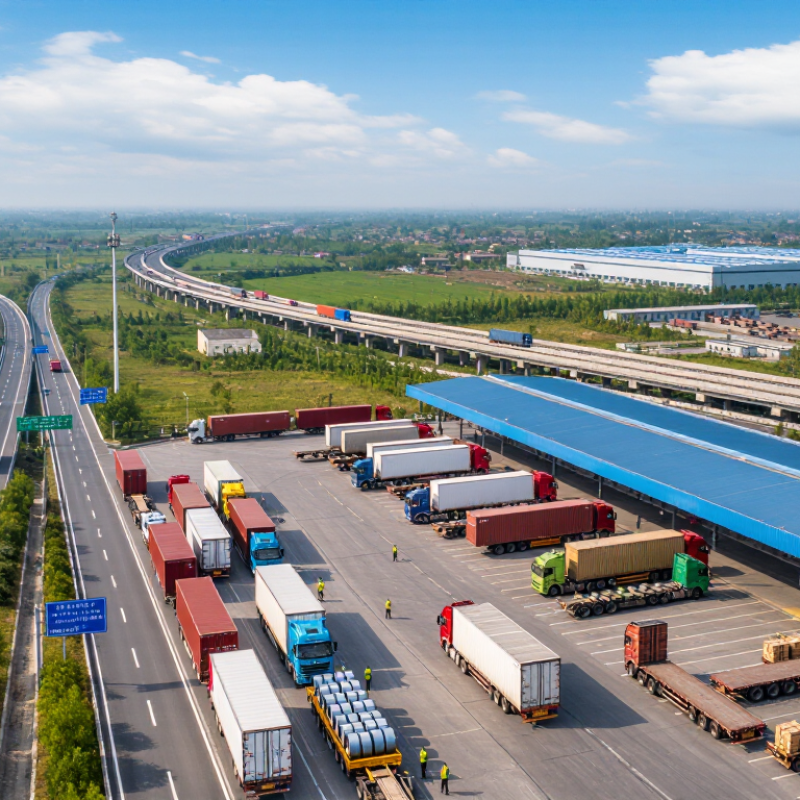
Best Inland Road Transport Services in China?

What Are Inland Road Transport Services in China?

Inland road transport services in China move cargo between factories, warehouses, rail terminals, ports, and final delivery points within the country. They may cover a single truckload or combine smaller shipments into shared loads. Typical work includes pickup scheduling, route planning, loading coordination, transit updates, and proof of delivery. A shipment might travel from a workshop in an inland city to a distribution warehouse, with several handling points along the way. Details matter.

The Ministry of Transport’s Statistical Bulletin of Transportation Industry Development 2023 reported about 40.3 billion tonnes of road freight and 7.39 trillion tonne-kilometres that year. These figures show the network’s scale, but they do not guarantee identical service in every region. Mountain roads, city delivery windows, weather, and warehouse cut-off times can change transit plans. A realistic quote should clarify collection and delivery addresses, cargo dimensions, loading requirements, waiting time, and whether the rate includes local handling. Some estimates still feel too tidy; actual loading delays can upset a carefully planned schedule. Reliable operators therefore need clear shipment records and timely exception updates, not just a low price.

Best Inland Road Transport Services in China? What Are Inland Road Transport Services in China?

China freight volume by transport mode, 2023 (billion tonnes). Road transport carried the largest volume, highlighting its role in domestic freight movement.

Source: National Bureau of Statistics of China, 2023 Statistical Communiqué. Air freight converted from 7.35 million tonnes. Figures are rounded.

How China’s Inland Road Transport Network Operates

China’s inland road transport network links coastal ports, inland production zones, and county-level markets through expressways, national highways, and local roads. Long-haul trucks typically carry freight between regional hubs, where shipments may be sorted or transferred for shorter delivery runs. At a loading bay, this can mean pallets moving from a tractor-trailer to smaller vehicles before reaching shops or factories.

The Ministry of Transport’s 2023 Statistical Bulletin reported about 40.3 billion tonnes of road freight and roughly 7.3 trillion tonne-kilometres. Scale is immense. But those totals do not show how evenly service reaches remote areas.

Operations depend on matching vehicle capacity, route conditions, delivery windows, and cargo handling needs. Expressways support longer journeys, while provincial and county roads connect industrial parks, farms, warehouses, and town centres. The World Bank’s Logistics Performance Index 2023 ranked China 19th overall, reflecting logistics performance across several dimensions, not road transport alone.

Dispatchers also contend with congestion, weather, uneven backhauls, and delays at loading points. A truck may arrive on time and still wait hours for a dock. That weak spot deserves more attention in network planning. Freight data measures movement; it says less about empty running, small-carrier conditions, or the final kilometres to a customer.

Which Types of Road Transport Services Are Available?

Inland road transport in China covers several service types, each suited to different cargo volumes and delivery schedules. Full-truckload transport reserves a vehicle for one shipment. It can reduce handling and works well for factory orders, palletized goods, or loads filling most of a truck. Less-than-truckload service combines smaller shipments from different customers. It may cost less for a few pallets, though extra transfers can add time.

Dedicated transport provides a vehicle and route planned around one customer’s needs. Express road services prioritize speed, often using scheduled departures between major cities. Temperature-controlled trucks carry goods that need stable conditions, such as fresh produce; confirm the required temperature range before booking. Heavy or oversized cargo may need specialized vehicles and route planning, including checks for road access and loading arrangements. Small details matter.

When comparing options, share accurate dimensions, weight, pickup access, and delivery deadlines. Ask how tracking updates work and what happens if a vehicle is delayed. A low quote is not always the simplest choice: transfer points, waiting time, and delivery restrictions can change the real cost. Service descriptions can vary, so confirm the plan in writing. There is no perfect option for every shipment.

How to Evaluate the Best Inland Transport Providers

Best Inland Road Transport Services in China?

Evaluating inland transport providers requires more than comparing freight rates. Check their route coverage, vehicle condition, driver training, and delivery performance. A reliable provider should explain loading procedures, transit windows, insurance terms, and damage claims clearly. Ask for recent performance data, not only polished promises. Tracking should show useful updates, such as pickup time, highway location, arrival estimate, and proof of delivery. Clear communication matters.

Tips: Request a sample quotation with every charge listed. Confirm whether fuel changes, tolls, waiting time, and storage are included. Review the service agreement carefully. Test the provider with a small shipment before moving regular volumes. Speak with the operations contact, not only the sales representative. Their response during a delay reveals more than a presentation.

In practice, strong providers prepare for traffic restrictions, weather disruptions, and sudden warehouse changes. Their backup plan should identify alternative routes and replacement vehicles. Safety records and maintenance logs also deserve attention. A very low quote can be attractive, but it may hide weak support or unclear liability. I have seen efficient-looking plans fail because loading times were unrealistic. That lesson still matters. Evaluate punctuality, reporting quality, and problem-solving together. The best choice is not always the cheapest one.

Best Inland Road Transport Services in China? - How to Evaluate the Best Inland Transport Providers
Practical evaluation benchmarks for selecting China inland road transport services
Service Category Typical Shipment Profile Best Use Case Typical Transit Range Vehicle or Equipment Requirement Key Compliance Requirements Recommended KPI Benchmark Evaluation Priority
Full Truckload (FTL) One shipper uses most or all of the truck capacity; commonly used for approximately 10–30 tonnes depending on vehicle type and road restrictions. Factory-to-warehouse, plant-to-distribution-centre, and long-distance domestic replenishment. Approximately 1–5 days for major domestic corridors, depending on distance, weather, traffic, and regional restrictions. Flatbed, box truck, curtain-side truck, or container chassis selected according to cargo dimensions and loading method. Accurate cargo description, compliant loading, weight control, delivery documentation, and legally required driver and vehicle qualifications. On-time pickup and delivery: at least 95%; proof-of-delivery completion: at least 98%. Very High
Less-than-truckload (LTL) Multiple shipments share truck capacity; suitable for pallets, cartons, and smaller commercial consignments. Regular shipments that do not justify a dedicated truck, especially between regional distribution hubs. Approximately 2–7 days, including consolidation, sorting, and hub transfers. Box trucks, pallet-handling equipment, cross-dock facilities, barcode scanning, and shipment tracking. Correct packaging, carton and pallet labels, accurate dimensions and weight, and clear delivery instructions. Shipment scan visibility above 98%; damage rate below 0.5%; delivery exception response within 24 hours. Very High
Dedicated Contract Transport Vehicles, drivers, or transport capacity are reserved for one customer under an agreed operating plan. High-frequency routes, stable production schedules, retail distribution, and multi-site manufacturing networks. Route-specific; scheduled daily, weekly, or according to production requirements. Dedicated fleet capacity, route planning, dispatch control, driver continuity, and optional on-site transport management. Service-level agreement, driver management, safety procedures, vehicle maintenance records, and performance reporting. Schedule adherence above 97%; vehicle availability above 98%; monthly KPI reporting required. Very High
Cold Chain Road Transport Temperature-sensitive food, pharmaceuticals, biological materials, or other controlled products. Products requiring chilled, frozen, or validated temperature-controlled transport. Approximately 1–5 days for domestic routes, subject to temperature, route, and handling requirements. Refrigerated truck, insulated body, calibrated temperature recorder, pre-cooling capability, and temperature alarm system. Temperature mapping where required, continuous temperature records, sanitary controls, qualified handling, and documented excursion procedures. Temperature compliance above 99%; data availability above 98%; excursion notification within 30 minutes. Critical
Dangerous Goods Transport Regulated chemicals, flammable materials, corrosive substances, gases, batteries, or other hazardous cargo. Industrial supply chains requiring legally controlled movement of hazardous materials. Approximately 1–7 days, depending on route approvals, restrictions, loading controls, and destination requirements. Approved vehicle type, hazard markings, emergency equipment, trained personnel, and compliant packaging or containment. Correct classification, transport documentation, safety data sheets, driver qualifications, route compliance, and emergency planning. Zero documentation-related incidents; 100% pre-dispatch compliance verification; immediate incident escalation. Critical
Oversized and Heavy-Haul Transport Machinery, industrial equipment, construction components, or cargo exceeding standard vehicle dimensions or weight limits. Project logistics, infrastructure construction, energy equipment, and factory relocation movements. Approximately 3–15 days, depending on permits, route surveys, escorts, bridge restrictions, and loading arrangements. Low-bed trailer, modular trailer, extendable trailer, lifting equipment, escort vehicles, and route-survey capability. Special road permits, approved route plan, axle-load compliance, load securing plan, escorts, and site safety coordination. 100% permit compliance; zero load-shift incidents; delivery window adherence above 95%. Critical
Intermodal Road–Rail Transport Containerized or standardized cargo transferred between road haulage and domestic rail services. Long-distance inland movements where cost efficiency, capacity, or lower emissions are important. Approximately 3–10 days, depending on rail schedules, terminal handling, drayage, and final-mile delivery. Container chassis, suitable lifting equipment, terminal connectivity, rail booking capability, and drayage coordination. Container condition checks, verified gross mass where applicable, terminal procedures, booking accuracy, and seal control. Booking accuracy above 98%; container availability above 97%; seal discrepancy rate below 0.1%. High
Final-Mile Distribution Small commercial deliveries from a regional warehouse or hub to stores, offices, sites, or end customers. Retail replenishment, e-commerce fulfillment, spare parts, service parts, and urban deliveries. Same day to 3 days within major urban and regional service areas. Light commercial vehicle, box van, route-optimization system, delivery scanning, and optional liftgate capability. Delivery appointment control, recipient verification, proof of delivery, parking or access compliance, and returns handling. First-attempt delivery above 95%; proof-of-delivery completion above 98%; customer complaint rate below 1%. High
Cross-Border Inland Road Transport Road shipments moving between mainland China and neighbouring markets through designated land ports. Regional trade lanes requiring coordinated border procedures and inland delivery. Approximately 2–10 days, depending on border congestion, customs clearance, documentation, and route conditions. Cross-border-capable vehicles, customs coordination, secure parking access, GPS tracking, and document control. Commercial invoice, packing list, transport documents, customs declarations, cargo classification, and border-specific requirements. Document accuracy above 99%; milestone visibility above 98%; border exception response within 2 hours. Critical
Reverse Logistics and Returns Returned products, reusable packaging, repair items, rejected goods, or recyclable materials moving back through the supply chain. Product returns, repair networks, packaging recovery, recalls, and inventory reconciliation. Approximately 2–10 days, depending on collection density, inspection, sorting, and destination requirements. Barcode scanning, return authorization controls, secure handling, inspection capability, and optional repacking resources. Return authorization, chain-of-custody records, product condition documentation, data protection, and disposal controls where applicable. Return scan completion above 98%; inventory reconciliation above 99%; processing cycle time within agreed SLA. High
Evaluation note: Transit times and KPI thresholds are practical domestic logistics benchmarks rather than guaranteed results. Final selection should also consider route coverage, total landed cost, safety record, insurance scope, digital tracking, emergency response, and the provider’s ability to meet cargo-specific regulations.

What Factors Influence Service Selection and Costs?

Choosing inland road transport in China depends less on the headline rate than on the shipment itself.

A pallet moving from an eastern factory to a western warehouse may need a different vehicle and schedule from a full truckload on a regular route.

Check the cargo’s weight, dimensions, loading method, and delivery window before comparing quotes.

Small details matter.

A narrow delivery entrance or a warehouse that accepts freight only before noon can add waiting time or require a smaller vehicle.

Costs usually reflect distance, vehicle type, fuel adjustments, tolls, and whether the load shares space with other freight.

Extra handling, remote-area delivery, and storage after a missed appointment may also appear on the final bill.

Ask providers to list these charges in writing and explain how they handle delays, damaged goods, and shipment tracking.

A very low quote can look tidy on paper, but it may leave important services unclear.

I would also compare realistic transit times, not just promised ones; that is easy to overlook.

Even careful estimates can miss local traffic or seasonal congestion, so leave some flexibility when the delivery deadline is important.

FAQS

What connects China’s inland road transport network?

Expressways, national highways, and local roads link coastal ports with inland factories, farms, warehouses, and county markets.

How does freight move between long-distance routes and local deliveries?

Large trucks often carry freight to regional hubs. Pallets may then move onto smaller vehicles for delivery to nearby shops or factories.

What should I check before choosing a transport provider?

Review route coverage, vehicle condition, driver training, delivery records, insurance terms, and damage-claim procedures. Ask for recent performance data.

What should a useful tracking update include?

Look for pickup time, highway location, estimated arrival, and proof of delivery. Clear updates matter.

Which charges can change a transport quote?

Fuel adjustments, tolls, waiting time, storage, extra handling, and remote-area delivery may affect the final bill. Get each charge in writing.

Why might a delivery take longer than expected?

Traffic, bad weather, loading delays, and warehouse appointment limits can cause hold-ups. A truck can arrive on time and still wait hours.

Is the lowest freight quote always the best choice?

Not necessarily. A low price may leave support, liability, or extra services unclear. Compare realistic transit times too.

How can I test a provider before regular shipments?

Start with a small shipment. Check its reporting, punctuality, and response when plans change. One test is useful, but not perfect.

Conclusion

Inland road transport services in China connect factories, warehouses, distribution centers, ports, and inland cities through an extensive network of highways, provincial roads, and regional routes. These services support the movement of full truckloads, less-than-truckload shipments, refrigerated goods, oversized cargo, and time-sensitive deliveries. Their operation typically involves route planning, vehicle allocation, loading coordination, tracking, documentation, and final delivery, allowing businesses to manage domestic supply chains with greater flexibility.

To identify the best provider, companies should evaluate coverage, fleet capacity, delivery reliability, shipment visibility, safety procedures, customer support, and experience with specific cargo requirements. Service selection and pricing may be influenced by distance, cargo volume, vehicle type, fuel costs, tolls, road conditions, seasonal demand, loading complexity, and delivery urgency. A suitable partner should offer transparent quotations, clear service terms, dependable communication, and scalable solutions that balance cost, efficiency, and operational needs.

Charlotte

Charlotte

Charlotte is a dedicated marketing professional who combines a strong understanding of the company’s products with a clear, customer-focused approach to communication. She regularly contributes expert articles to the company website, helping readers understand product features, practical......